Beijing’s tree die-off reveals hidden risks of rapid underground water recovery
At a time of year when Beijing’s vegetation should be at its greenest, thousands of trees of various species in a park in the city’s Chaoyang district have withered and died because they were too wet. Beijing Daily, the city’s official newspaper, said on Monday that rising groundwater levels might be to blame. Jinzhandian Park, a lush flood-storage wetland park nicknamed Beijing’s “Little Lake…
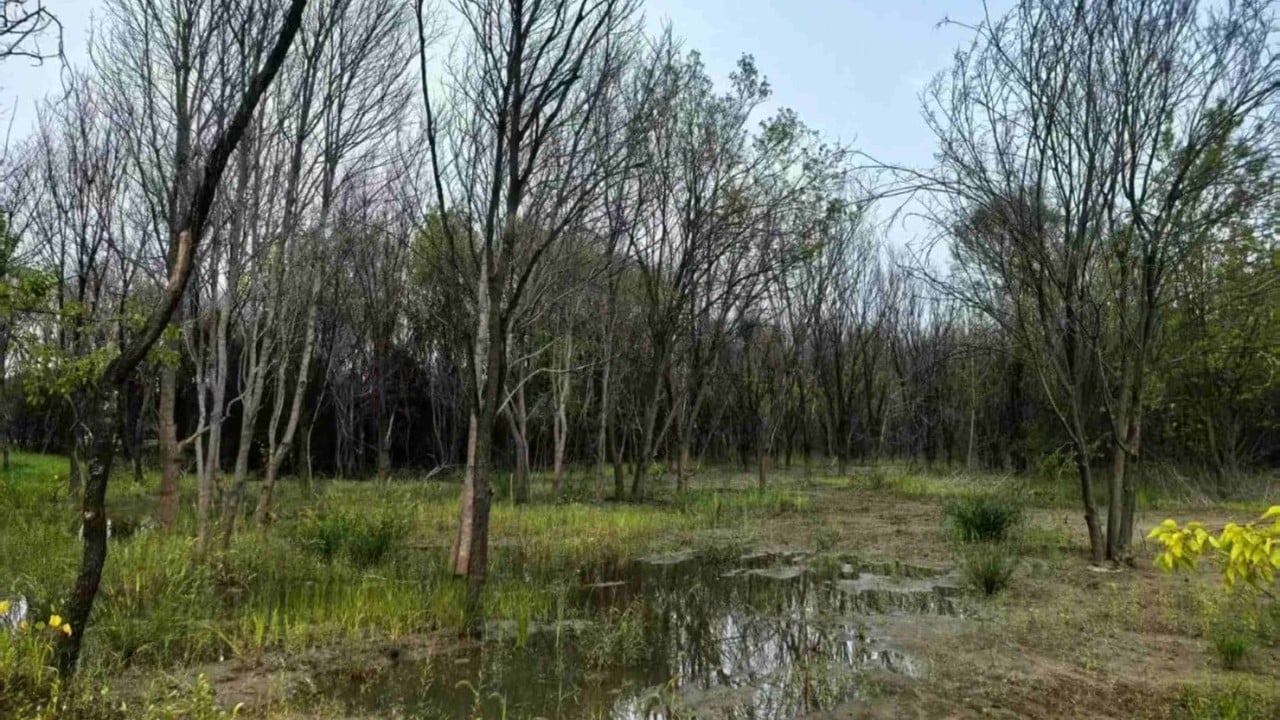
In Beijing, a park in the Chaoyang district's Jinzhandian area has seen a large-scale die-off of various tree species, including locust, poplar, willow, ginkgo, and pine. The city's official newspaper, Beijing Daily, reported that rising groundwater levels may be the cause of the widespread withering and death of the trees in late summer.
Jinzhandian Park, known as "Little Lake Baikal" due to its lake and extensive woodlands, was opened to the public in September of the previous year and had attracted many visitors. However, thousands of trees - both young and mature - have succumbed to the excessive moisture. Official from the park's administration and the Chaoyang district water bureau stated that the large-scale die-off along the shore was "most likely due to prolonged waterlogging."
The water bureau official added that they were still assessing the number of dead trees and planning measures to address the issue. While some surviving trees are being given growth-promoting treatments and drainage, there has been no announcement of a formal investigation into potential problems with the landscaping project, tree maintenance, or the root cause of the rapid die-off.
Groundwater levels in the North China Plain, where Beijing is situated, have been rapidly recovering due to human intervention. A study by Tsinghua University found that after a prolonged drop in groundwater levels in the 1990s, it reached a historic low in 2019. Since then, systematic interventions have caused groundwater levels to surge by 70 centimeters annually since 2020, reaching levels seen in 2005 by the end of 2024.
This unprecedented aquifer recovery, detailed in the peer-reviewed journal Nature Communications in August 2023, contrasts with Beijing's exceptionally wet summer, with rainfall over 70 percent above the seasonal average.
Written by urgent.news from South China Morning Post's reporting — not their text. Machine-written — may contain errors; check the original before relying on it.