Ukraine’s missile, Europe’s sensors—FREYJA enters active development on an early-2027 clock
Ten countries are combining Ukrainian missiles and launchers with European radars and sensors as Russia exposes a widening gap in Ukraine’s air defenses.
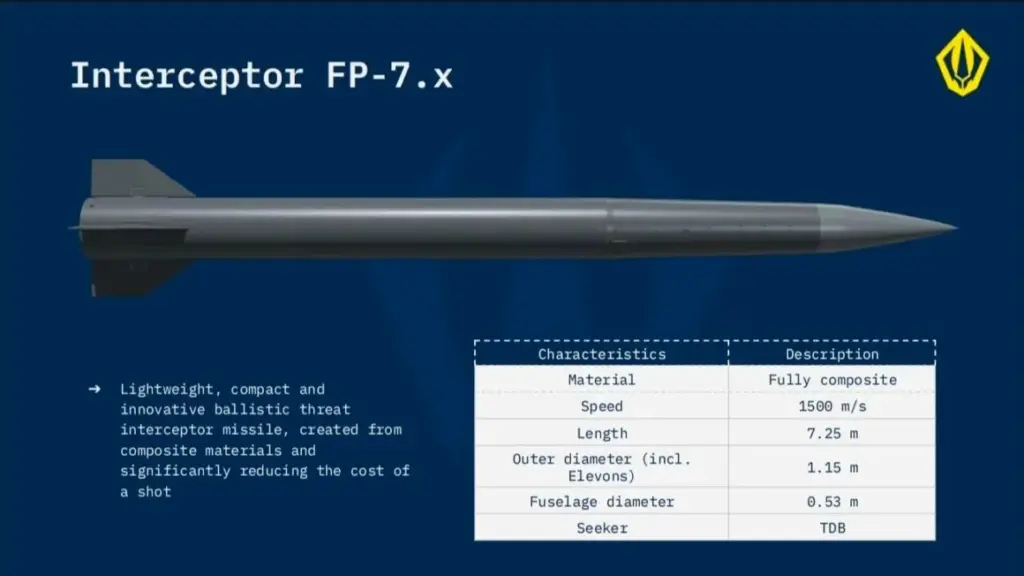
Ukraine's President Volodymyr Zelenskyy anticipates the joint European FREYJA interceptor program to produce significant outcomes by the transition between 2026 and 2027. The initiative, already progressing swiftly, plans for Ukraine to manufacture the interceptor and launcher, while European partners would supply radars, sensors, and other essential components.
The FREYJA system aims to counter ballistic missiles and would benefit other European nations. Successfully developed, Ukraine could join a select group of countries possessing an anti-ballistic system. The project aims to address Ukraine's growing shortage of interceptors capable of countering Russian ballistic missiles. Although the FREYJA interceptor won't alleviate the immediate shortage, it could lessen Europe's long-term dependence on limited US-made Patriot interceptors.
Recent Russian attacks have highlighted the consequences of this shortage. The FREYJA interceptor could involve ten countries, with more nations pledging to join. European defense companies will contribute radars, sensors, and other necessary technology. Each FREYJA round is estimated to cost around $700,000, compared to the roughly $4 million for a PAC-3 interceptor.
However, FREYJA is not a direct replacement for Patriot and has not yet demonstrated a ballistic-missile interception. The lower cost might prove advantageous if Ukraine can manufacture these interceptors on a larger scale. Zelenskyy's timeline focuses on tangible results, not a fully operational or mass-produced system. Ukraine's urgent need for FREYJA became evident during Russia's surprise assault on 5 August, where the nation failed to intercept any of the 28 missiles launched.
Despite neutralizing 98 out of 115 drones, missiles and drones still struck 26 locations, killing 17 people. Similar inefficiencies were observed in July 2026, with Ukraine successfully intercepting only one in eighteen ballistic missiles fired during major attacks. The United States has yet to provide a swift solution, with Trump's promise of a Patriot production license still in its early stages.
Amid this situation, Ukraine is pursuing two paths: immediately seeking scarce Patriots while simultaneously developing FREYJA to reduce Europe's long-term reliance on these scarce interceptors.
Written by urgent.news from Euromaidan Press's reporting — not their text. Machine-written — may contain errors; check the original before relying on it.
This story
This is one outlet's version. Read the fullest account.
- Russian e-commerce giant Wildberries adds drone strikes to seller insurance policies amid wave of Ukrainian warehouse attacks theins.press
- Musk refuses to help Ukraine launch strikes against Russian missile launchers english.nv.ua
- Ukraine strikes Wildberries warehouse more than 2,000 kilometers inside Russia meduza.io
- Ukraine’s General Staff confirms strikes on two Russian refineries and Black Sea rig euromaidanpress.com
- The growing Russian threat giving Ukraine only seconds to react sbs.com.au