On a Philippine beach, villagers are stepping up to save sea turtle nests
Beaches in San Vicente municipality in the Philippines’ Palawan province are crucial nesting grounds for olive ridley sea turtles. But the turtles and their babies face perilous journeys on those beaches — from dogs, tourism, and increasingly severe storms and high tides. To counter these threats, the NGO Large Marine Vertebrates Research Institute Philippines (LAMAVE) […]
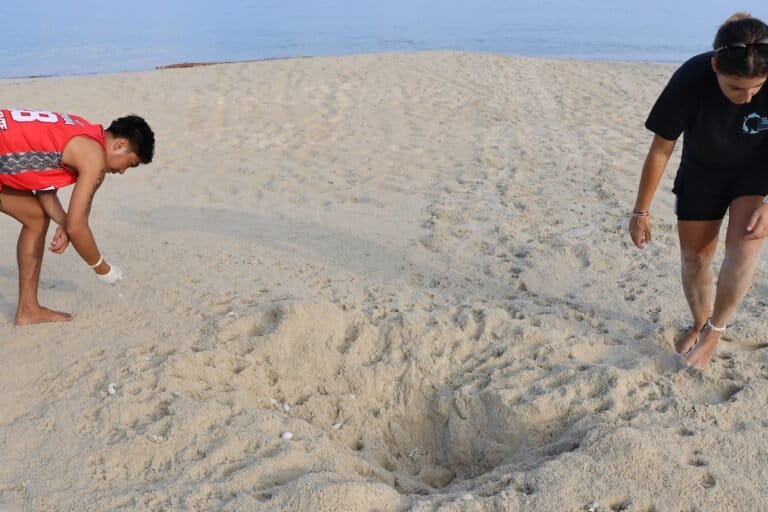
In the San Vicente municipality of the Philippines' Palawan province, local villagers are actively involved in saving sea turtle nests along the beaches. These beaches serve as crucial nesting grounds for olive ridley sea turtles, but the turtles and their offspring face numerous dangers including dogs, tourism, severe storms and high tides. The NGO Large Marine Vertebrates Research Institute Philippines (LAMAVE) has joined forces with the locals to address these threats.
In Santo Niño village, volunteers and patrollers undertake extensive night patrols covering over 8 kilometers (5 miles) of the beach in shifts of five. Upon discovering a nesting turtle, the patrollers ensure the animal's safety from dogs. After the turtle has completed nesting, the patrollers meticulously measure her and capture photographs of her, enabling future identification.
They then proceed to relocate the eggs to protected hatcheries, a crucial step as nests left on the beach are almost invariably destroyed by stray dogs or flooding.
Occasionally, patrollers come across deceased nesting mothers or turtles severely wounded by dogs. In such cases, they remove the eggs from those nests as well. LAMAVE researcher Klara Simon emphasizes that even if the mother turtle succumbs to her fate, at least her offspring have a chance at survival. In the hatcheries, the eggs are strategically placed in new nests in the sand, which are monitored every few hours.
Two months after the eggs are laid, baby olive ridleys (Lepidochelys olivacea) begin to emerge. According to LAMAVE data from the previous season and early data from the current season, the hatcheries have shown promising results.
Written by urgent.news from Mongabay's reporting — not their text. Machine-written — may contain errors; check the original before relying on it.