Castaway SpaceX rocket stage crashed into moon: Scientists
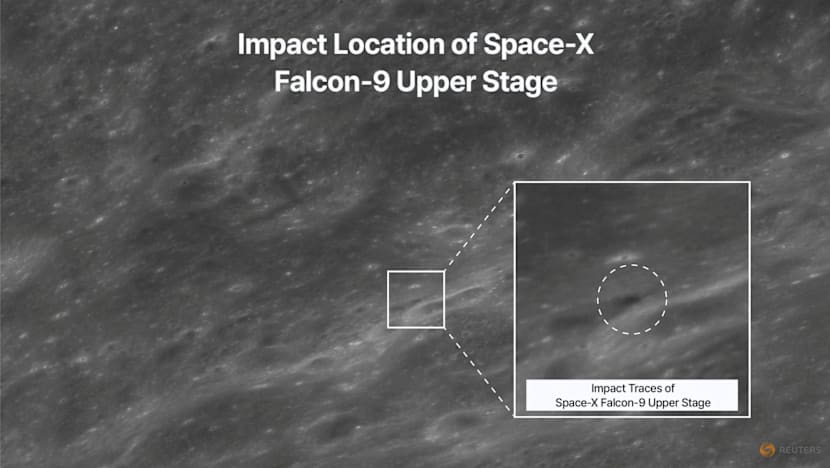
A section of a SpaceX rocket, roughly the size of a bus, impacted the moon as forecasted, according to scientists on Wednesday (Aug 5). This unanticipated collision did not endanger Earth and is anticipated to create a crater on the lunar surface, which space agencies, including NASA, aim to document. The European Southern Observatory (ESO) confirmed the crash based on observations from its Very Large Telescope in Chile, which captured evidence of debris streaming away from the impact point.
The telescope detected sodium and lithium gas in the impact plume, lasting for roughly 5-10 minutes post-collision. These elements are believed to have come from both lunar soil and the rocket itself. Scientists had predicted the Falcon 9 upper stage would strike the moon's surface around 6.35am GMT (2.35pm Singapore time) on Wednesday, and this prediction was accurate.
Jonathan McDowell, an astrophysicist, stated that the impact was unavoidable, likening it to Sir Isaac Newton's law of motion. While NASA and other space agencies planned to take images of the impact site afterward, it may take several days to receive that information. NASA and SpaceX intend to utilize this event to enhance space tracking and monitoring techniques.
Written by urgent.news from Channel News Asia's reporting — not their text. Machine-written — may contain errors; check the original before relying on it.