As their warships encircle Japan, what signals are China and Russia sending?
The recent joint patrol between China and Russia around the Japanese archipelago showed how the nations’ military cooperation was becoming “progressively more ambitious”, analysts said. The Japanese defence ministry revealed on Tuesday that three Chinese naval vessels – Type 055 and Type 052D missile destroyers alongside a Type 903 support ship – were spotted moving southwest through the Korea…
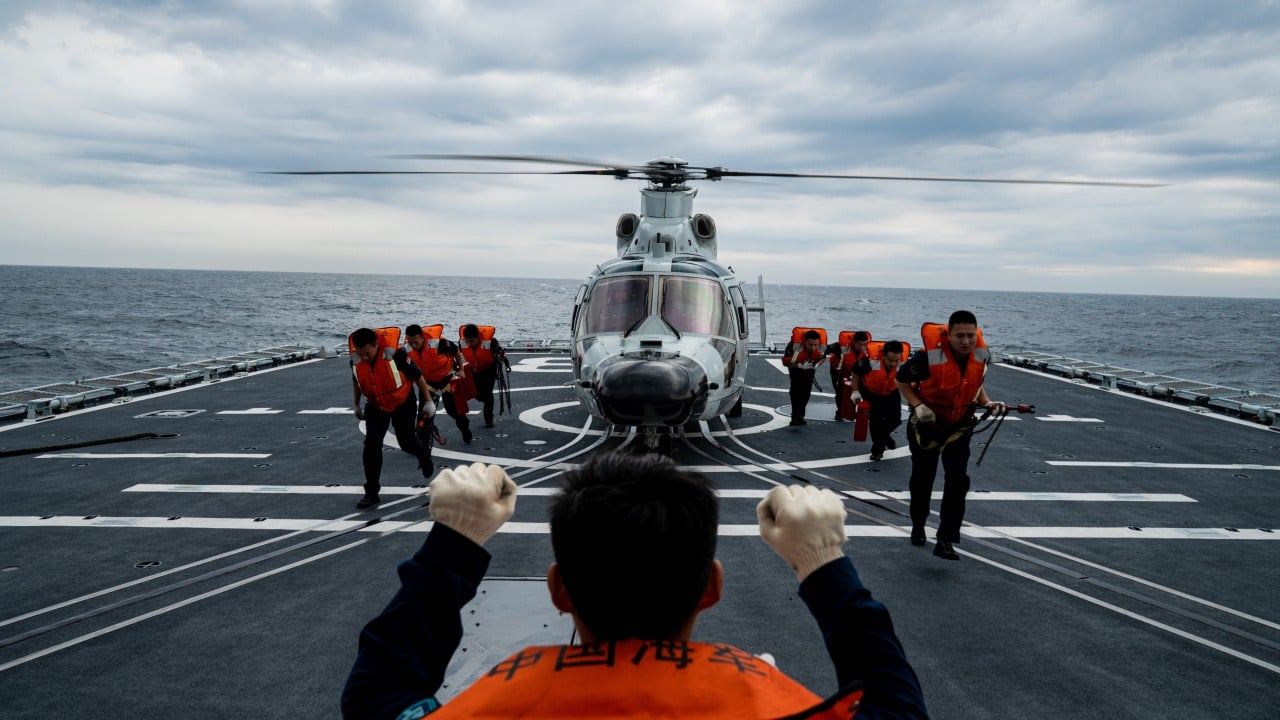
China and Russia are deepening their military collaboration, with a 17-day joint patrol around Japan signaling to Tokyo and the United States, according to analysts. Three Chinese naval vessels and a Russian corvette embarked on the joint patrol on July 13, traversing the western Pacific Ocean, the Sea of Okhotsk, and the Sea of Japan, also known as the East Sea.
The three Chinese ships then sailed southwest through the Korea Strait over the weekend and Sunday, completing a circumnavigation of the Japanese archipelago. This marks the first time Chinese and Russian ships have transited the Vries Strait in the Kuril Islands together, a territory also claimed by Japan.
The Global Times, a nationalist publication linked to the People's Daily, reported that this joint maritime patrol was also the first time Chinese and Russian vessels had navigated the Vries Strait concurrently. The Russian-administered islands are also contested by Tokyo. The Japanese Ministry of Defence described the series of activities, including joint patrols, as a show of force against Japan, expressing serious concern for Japan's national security.
The defense ministry stated that Maritime Self-Defence Force vessels and patrol aircraft were deployed to monitor the Chinese ships during their transit.
Stephen Nagy, a professor of international relations at Tokyo's International Christian University, believes that China-Russia joint patrols around Japan serve two primary purposes: pressuring Japanese Prime Minister Sanae Takaichi to reconsider her stance on potential military action in the event of an attack on Taiwan, and demonstrating Russia's capability to engage in military operations in the Indo-Pacific, despite the ongoing conflict in Ukraine.
Nagy asserts that the patrol demonstrates China's ability to navigate the first island chain and suggests a potential collaboration between Beijing and Moscow in the case of a Taiwan contingency.
The Japanese government has released a defense white paper highlighting China's escalating activities in the waters surrounding Japan and beyond the first island chain, a term encompassing a series of islands and archipelagos in East Asia, extending from Japan to the Philippines. Taiwan, which Beijing considers part of China and intends to reunify by force if necessary, poses a particular concern for Japan and its allies.
The white paper emphasizes that these military activities must be addressed through overall national strength and cooperation with allies and like-minded nations.
Research fellow at the Yokosuka Council on Asia-Pacific Studies, Benjamin Blandin, notes that while China and Russia have been conducting joint naval patrols for years, the activities have become increasingly ambitious, lasting longer, occurring in broader areas, and exhibiting more strategic assertiveness. Blandin emphasizes that these joint patrols, coupled with other developments like frequent People's Liberation Army exercises around Taiwan, maritime and air incursions near Japan, and the expansion of grey-zone activities, reinforce Japan's perception of a growing, complex, and contested security environment.
This, in turn, likely bolsters Japan's resolve to strengthen security cooperation with like-minded partners.
Maritime security expert Ray Powell, director of the SeaLight transparency project, contends that the passage through the Vries Strait into the Sea of Okhotsk allows China to assert that the first island chain no longer confines its military operations. Powell emphasizes the significance of such operations, stating that they bolster the case for increased defense spending and closer alignment with Washington and its allies in Tokyo.
Associate Professor Benjamin Barton of the University of Nottingham Malaysia suggests that these training exercises are gaining traction within China's strategic long-term planning, aimed at bolstering national readiness for a potentially more volatile geopolitical landscape. From China's standpoint, enhancing and testing its operational capabilities in a more hostile environment is increasingly becoming a priority.
Written by urgent.news from South China Morning Post's reporting — not their text. Machine-written — may contain errors; check the original before relying on it.
This story
This is one outlet's version. Read the fullest account.