Why haven't we seen images of SpaceX Moon crash yet?
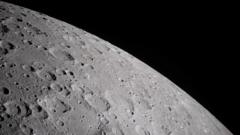
The SpaceX rocket part has crashed into the Moon, forming a new crater, images from orbiting satellites should arrive in the coming hours and days.
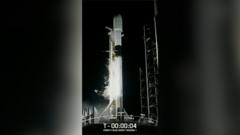
On August 5, a SpaceX Falcon 9 rocket's spent upper stage is expected to crash into the moon at around 5,000 mph (8,748 km/h). Two recent studies suggest the impact could be visible through telescopes in North and South America, providing astronomers with a rare chance to observe the event in real-time.
The impact will occur near the moon's Einstein crater, with the rocket striking the lunar surface at a relatively slow speed of 5,436 mph (6 times slower than a natural asteroid impact). However, the resulting flash of light will be too faint to be seen with the naked eye, and the crater itself is likely to be too small and shallow to be visible from Earth.
What viewers might be able to observe instead is the plume of lunar regolith and potentially water vapor that will be launched from the impact site. This plume could reach heights of up to 31 miles (50 km) and may be visible above the lunar limb as a cloud for up to 7 minutes. Scientists believe the plume could be seen with a good backyard telescope, provided the observer knows exactly where to point it and can account for atmospheric refraction.
While the impact itself may not be easily observable, the study of the resulting plume could provide valuable insights into how human-made objects affect the lunar surface. This knowledge will be useful for future lunar missions, helping researchers understand the potential impacts of disposing of upper stages and other debris on the moon.
Written by urgent.news from Live Science's reporting — not their text. Machine-written — may contain errors; check the original before relying on it.
This story
This is one outlet's version. Read the fullest account.
- SpaceX rocket stage believed to have slammed into the moon phys.org
- A SpaceX rocket will hit the moon at 5,000 mph tonight. Experts explain what you could see, and when. livescience.com
- Elon Musk says SpaceX data centers will crush competitors because having rocket scientists is like the Yankees ‘playing a little league team’ fortune.com
- SpaceX rocket stage believed to have slammed into Moon, NASA to collect data euronews.com
- A SpaceX rocket will crash into the moon this week. Why is it on a collision course? space.com
- SpaceX rocket set to crash into the moon at seven times the speed of sound — but the 5,400 mph impact is entirely expected, and might even prove useful for NASA techradar.com
- Why haven't we seen images of SpaceX Moon crash yet? bbc.co.uk
- A SpaceX rocket is about to hit the moon—these videos show what could happen scientificamerican.com