Astronomers witness the strange final moments of a massive star's supernova death (video)
Astronomers have captured the death of a massive star from its first faint flash of X-rays, revealing an unusual supernova.
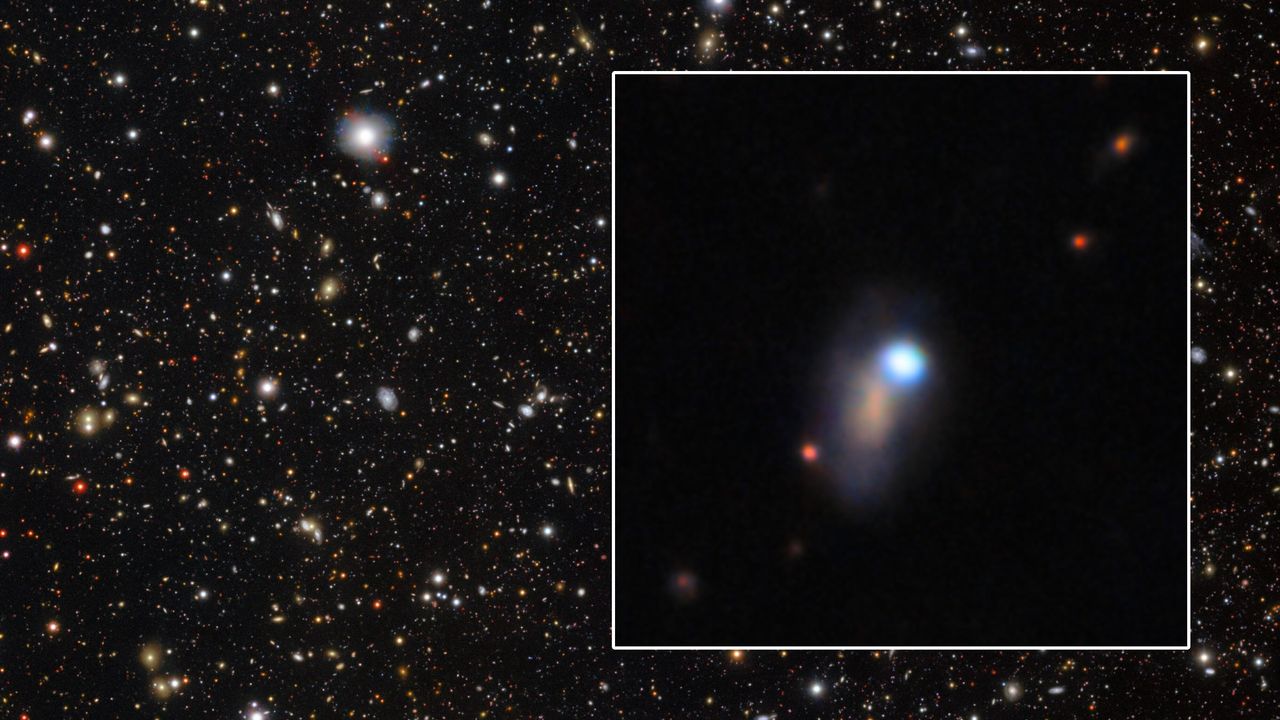
In March 2026, astronomers witnessed a unique supernova explosion, SN 2026gzf, through a brief X-ray flash detected by China's Einstein Probe spacecraft. This event originated from a galaxy approximately 500 million light-years away. Follow-up observations led to the identification of SN 2026gzf as a broad-lined Type Ic supernova, known for the collapse of massive stars that have lost their outer layers of hydrogen and helium.
These explosions often result in powerful jets and gamma-ray bursts, but SN 2026gzf did not exhibit either characteristic.
Instead, the initial X-ray signal was a "shock breakout," the moment the blast wave generated by the collapsing star reached its surface and emitted its first burst of radiation. This faintest shock breakout yet linked to a broad-lined Type Ic supernova provided a rare opportunity for researchers to study the event using multiple telescopes. The observations revealed the supernova's physics, including the X-ray shock breakout, the supernova itself, and the interaction with material previously ejected by the dying star.
The progenitor of SN 2026gzf was a Wolf-Rayet star, about 20 times the mass of the sun, which had shed its hydrogen and helium layers before the explosion. The observations showed multiple shells of material surrounding the star, likely expelled during turbulent mass loss episodes prior to the explosion. These findings suggest that broad-lined Type Ic supernovas may not always produce gamma-ray bursts or relativistic jets, and massive stars may follow various pathways to reach similar-looking explosions.
Further study of shock breakout events could help determine if all stripped stars share a similar "lifestyle" before collapse and uncover any differences among them.
Written by urgent.news from Space.com's reporting — not their text. Machine-written — may contain errors; check the original before relying on it.