This Image from the Dark Energy Camera Is a Bit Van Gogh, No?
Astronomy meets 19th-century art The post This Image from the Dark Energy Camera Is a Bit Van Gogh, No? appeared first on Nautilus .
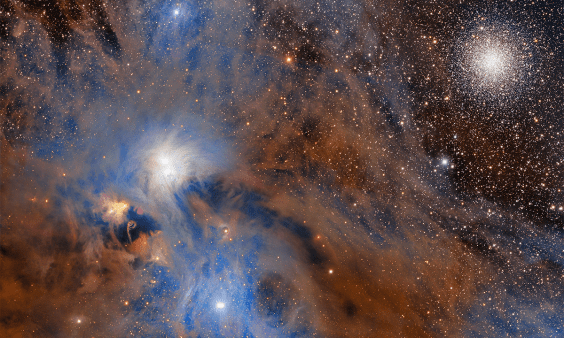
A newly released photograph from the Dark Energy Camera (DECam) at the National Optical-Infrared Astronomy Research Laboratory (NOIRLab) bears striking resemblance to the iconic 1889 painting "The Starry Night" by Vincent van Gogh. The DECam's image captures the swirling, vibrant swirls of the Corona Australis Molecular Cloud, located approximately 430 light-years away from our planet.
Within this cloud, two white dots stand out: NGC 6726, in a blue haze, and NGC 6729, in an orange haze, both of which are not labeled in the annotation. A brighter orange region, binary star system R Coronae Australis, is also visible. This system contains a young star nearing the end of its life cycle, yet to initiate hydrogen fusion.
Surrounding this star, a blue gas haze illuminates the scene, created by the formation of hundreds of thousands of young stars and the light they emit. On the sharper right side of the image, a prominent globular cluster (a dense collection of stars) known as NGC 6723 can be seen, situated over 28,000 light-years away from Earth.
This cluster is the brightest group of stars visible, harboring millions of stars within its bounds. The DECam, mounted on the Víctor M. Blanco 4-meter Telescope at the Cerro Tololo Inter-American Observatory in Chile, boasts an impressive 570-megapixel resolution, a lens measuring nearly 3.3 feet in diameter, and 74 detectors for capturing the image.
The image showcases the DECam's advanced capabilities, far surpassing the tools Van Gogh used in creating his masterpiece. Despite the advancements in technology, both the DECam's image and "The Starry Night" share a common goal of capturing the awe-inspiring beauty of the cosmos.
Written by urgent.news from Nautilus's reporting — not their text. Machine-written — may contain errors; check the original before relying on it.