NASA’s new dark energy space telescope can also detect killer asteroids
At the end of August, NASA is set to launch the Nancy Grace Roman Space Telescope from Kennedy Space Center in Florida. Its quest is to help us better understand how the universe works, from the glue-like dark matter that keeps galaxies together to the elusive dark energy that drives the expansion of the cosmos.…
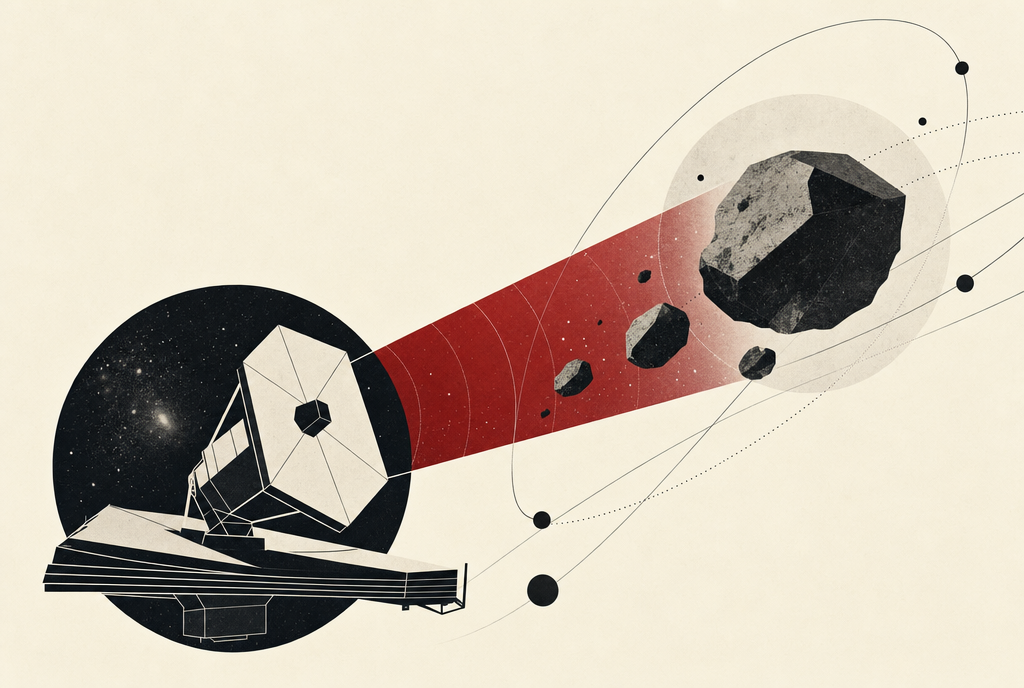
NASA's forthcoming Nancy Grace Roman Space Telescope, set to launch at the end of August from Florida's Kennedy Space Center, aims to unravel the mysteries of the universe, such as dark matter and dark energy. However, this telescope could also play a crucial role in protecting Earth from potential asteroid threats. A team of planetary scientists and astronomers recently outlined how Roman will efficiently scan asteroids, providing valuable data on their trajectories, sizes, and compositions.
Equipped with a super-wide-angle, 300-megapixel infrared camera, the telescope can capture a vast area of space—around 100 times larger than the Hubble Space Telescope—allowing it to discover thousands of new planets, tens of thousands of exploding stars, and survey over a billion galaxies in exceptional detail. While Roman was not designed for asteroid detection, last summer, it faced significant funding cuts by the Trump administration.
In response, a researcher at the Space Telescope Science Institute, Bryan Holler, proposed showcasing Roman's capabilities in planetary defense to gain more support from lawmakers and taxpayers. Holler and his colleagues' proposal will be presented at the Europlanet Science Congress in The Netherlands. The telescope's unique ability to observe a large portion of the solar system, including near-Earth asteroids, makes it especially well-suited for this task.
Roman's infrared vision can detect small asteroids up to 60 feet long, comparable to the asteroid that exploded above Chelyabinsk, Russia, in 2013, causing widespread damage and injuries. To spot potential threats, Roman's software must be adjusted to identify and exclude streaks caused by cosmic rays, glitches, or asteroids. While Roman won't be an asteroid-finding wunderkind on its own, it will complement the James Webb Space Telescope, which is designed to study galaxies and stars in the far reaches of the universe.
Together, these telescopes can track and analyze asteroids, providing essential information to determine whether they pose a threat to Earth or can be deflected using spacecraft or nuclear weapons. Despite its planetary defense capabilities, Roman will also contribute to various other scientific discoveries, as it will sample a vast volume of the cosmos.
The telescopes working together—Roman, JWST, and others like NEO Surveyor—will significantly increase our ability to detect and study potentially hazardous asteroids, ultimately safeguarding Earth from future cosmic threats.
Written by urgent.news from MIT Technology Review's reporting — not their text. Machine-written — may contain errors; check the original before relying on it.