Total solar eclipse: how to watch live from home
A total solar eclipse is coming to Europe. The European Space Agency (ESA) will broadcast live from 19:30 CEST on 12 August, allowing you to experience this rare event from anywhere in the world. Quick links: - Live broadcast on YouTube (12 August, 19:30–20:45 CEST) - Event programme in León, Spain (12 August, 10:00–14:00 and 17:30–21:45 CEST) - Overview of all ESA activities, including videos,…
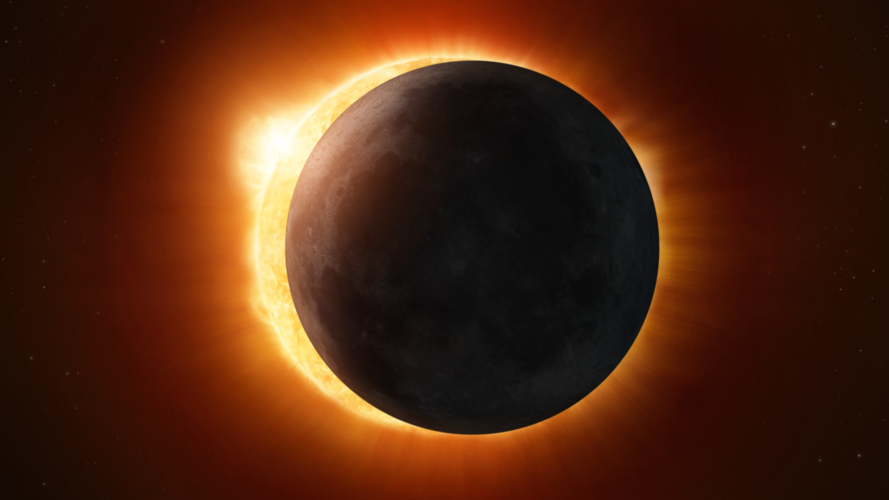
A total solar eclipse is set to grace Europe on 12 August 2026, and the European Space Agency (ESA) will provide a live broadcast from 19:30 CEST, allowing viewers worldwide to witness this spectacular celestial event. The live broadcast will be hosted by renowned space scientist Dame Dr Maggie Aderin and ESA's Director of Science Professor Carole Mundell, featuring ESA scientists Andy To, Miho Janvier, and Martin Hewitson, as well as observatory director Javier Cenarro.
During the eclipse, viewers will be treated to telescope feeds, drone shots, and interviews with experts discussing the Sun's corona, the historical impact of eclipses on our understanding of gravity, and ESA's plans for artificial solar eclipses in space. The highlight of the broadcast will be the one-minute and 21-second period of totality at 20:31 CEST, when Javalambre will be plunged into complete darkness.
Located within the path of totality, the Observatorio Astrofísico de Javalambre offers excellent viewing conditions with rare cloud cover and low light pollution. The observatory's professional telescopes will provide close-up observations of the eclipse's different phases, while additional small telescopes will be set up to offer real-time views. ESA will also receive live observations from two other locations within the path of totality, increasing the chances of capturing high-quality imagery for the live broadcast.
In addition to the main broadcast, ESA has organized a free public event in León, Spain, featuring hands-on workshops, experiments, and interactive activities for all ages. The event will run from 10:00–14:00 CEST, followed by an outdoor program starting at 17:30 CEST, with the main stage program beginning at 18:30 CEST. Visitors can engage with the eclipse experience by participating in the various activities and discussing their questions using the hashtag #EuropeanSolarEclipse on Bluesky and X.
Written by urgent.news from ESA Space Science's reporting — not their text. Machine-written — may contain errors; check the original before relying on it.