Your brain may map emotional concepts onto a hexagonal grid, new study suggests
Everyday life throws a whole range of emotional experiences our way, from exciting and relaxing moments to tense or gloomy encounters. Each experience is shaped by what's present around us in the moment, the sensations our body is experiencing and our past experiences. This entire scene is set by the brain, which draws on these experiences of the past, organizing the information it gathers into…

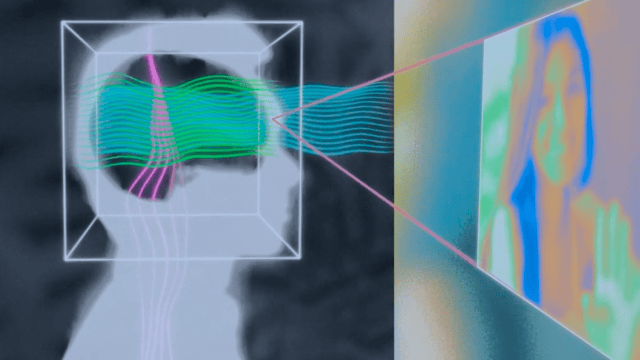
Emotions, ranging from joy to fear, are processed by the human brain using a hexagonal grid-like coordinate system, according to a recent study. Researchers from PLOS Biology investigated whether the brain maps emotions using a coordinate system, conducting experiments with participants watching facial expressions or reading emotionally charged phrases.
The study, which involved 18 healthy adults, revealed a sixfold symmetry in the brain's ventromedial prefrontal cortex (vmPFC) during emotional transitions. The vmPFC, responsible for emotion regulation and decision-making, exhibited neural activity patterns that aligned with this hexagonal grid across different emotional stimuli, such as facial expressions and phrases.
This suggests that the brain represents shared emotional meaning rather than treating each emotion as an isolated category. The findings indicate that the brain's organization of emotional knowledge allows for predictions and flexible decision-making based on the relationships between emotions.
Written by urgent.news from Medical Xpress's reporting — not their text. Machine-written — may contain errors; check the original before relying on it.