Elektromobilität: Ein Hamburger Unternehmer trotzt der Konkurrenz aus China
Florian Walberg ist Pionier bei privaten E-Scootern. Heute drohen Xiaomi und Segway seine Marke zu verdrängen. Um das zu verhindern, geht er an die Grenzen seines Qualitätsversprechens.
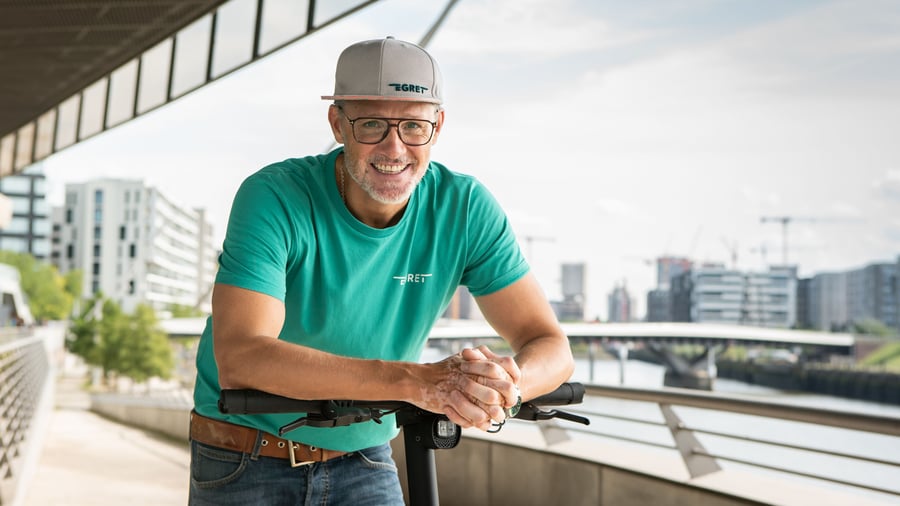
Florian Walberg, a Hamburg entrepreneur, is defying competition from Chinese companies in the booming electric scooter market. His latest model, the Egret, is an electric scooter with a built-in seat and can reach speeds of up to 45 km/h. Walberg claims this is the first premium model of its kind. The rise of private e-scooter ownership in Germany has become one of the fastest-growing sectors in the mobility industry.
According to the association of German insurers, the number of private e-scooters on the roads rose from 571,000 in 2022 to 1.36 million in the previous year. McKinsey mobility expert Darius Scurtu notes that the market is still growing by 20-30 percent annually. Despite the popularity of bicycles and the niche status of scooters, 60 percent of all journeys are shorter than five kilometers, making them suitable for forms of micromobility such as e-scooter riding.
Scurtu believes the European market for private e-scooters could become a one-to-two billion dollar market by 2030. The problem is that the market is dominated by Chinese brands Xiaomi and Segway. Walberg aims to prove that there is still room for a German manufacturer in this market. His journey began with selling illegal scooters before he worked as a singer, TV presenter, and music producer.
He started repairing scooters in a Hamburg workshop and impressed the importers enough to be invited to China to suggest improvements to their products. After eight years working for a Chinese company, Walberg decided to start his own venture. He researched EU technical standards and contacted Segway to lobby for the official recognition of e-scooters in Germany.
In 2017, Walberg and his team from Decathlon, Segway, Honda, and Toyota created a standard for the new class of e-scooters. Although the technical standards were set, German lawmakers still needed to decide on helmet requirements, maximum speeds, and whether e-scooters should be allowed on roads or bike paths. In 2019, e-scooters were officially allowed on German roads, and Walberg was prepared. His company, Egret, was the only serious player in the market for private e-scooters at the time.
Written by urgent.news from Handelsblatt's reporting — not their text. Machine-written — may contain errors; check the original before relying on it.
This story
This is one outlet's version. Read the fullest account.
- E-mobility: A Hamburg entrepreneur defies the competition from China handelsblatt.com