Disappearing Moon Craters
Modeling of small lunar craters demonstrates that topography- and size-dependent degradation rates affect crater-based age determinations and constrain the origin and preservation timescales of lunar water ice.
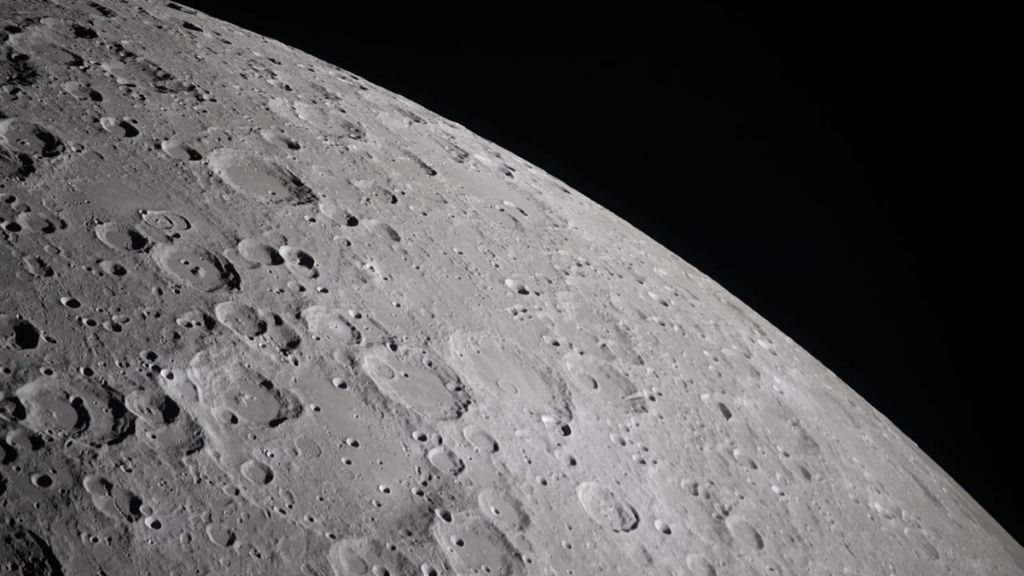
Lunar impact craters serve as valuable tools for determining the ages of surface units and preserving water ice, according to a recent study by Zhang et al. [2026]. However, these craters, especially the small ones with diameters between 50 and 500 meters, degrade over time, and understanding the factors influencing degradation rates is crucial for accurate age determination.
The study uses numerical simulations of crater formation and evolution, coupled with comparisons to observed crater dimensions, to investigate the morphology of small lunar craters. The results reveal that crater degradation depends strongly on both the size of the crater and the local topography, as well as whether the craters are located in maria or highlands.
The findings of this research provide substantially improved constraints on crater retention ages, which is essential for understanding the origin and preservation of lunar water. Since small craters with a diameter of less than 100 meters have relatively short lifetimes of around 100 million years, any water currently preserved within these features is likely of recent origin.
Written by urgent.news from Eos's reporting — not their text. Machine-written — may contain errors; check the original before relying on it.