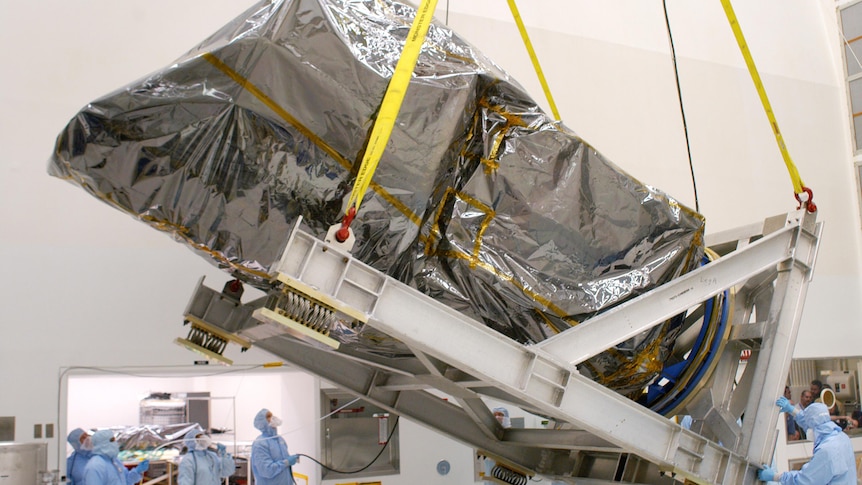
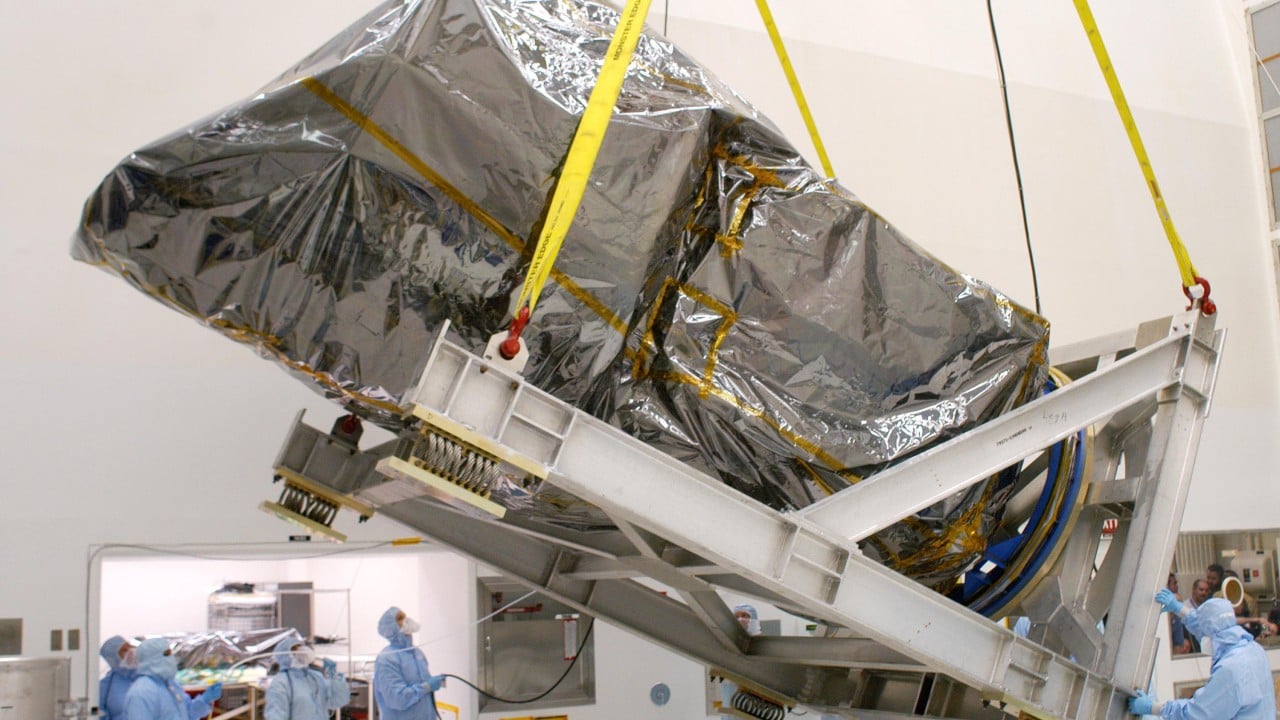
A NASA space telescope plunged back to Earth after a mission that lasted 11 times longer than planned
The Swift Observatory's demise came less than three months after a long-shot rescue mission failed.
CAPE CANAVERAL, Fla. (AP) — NASA’s Swift Observatory, a premier space telescope, fell back to Earth on Wednesday, concluding its 22-year mission of studying the universe’s most powerful explosions. The U.S. Space Force verified Swift’s reentry over Indonesia following tracking of its diminishing orbit, attributed to significant solar activity over recent years.
NASA had enlisted a private firm to augment the telescope’s orbit, but their three-armed robotic craft, Katalyst Space, encountered difficulties following its July launch and crashed in September. It remains unclear how much of the 1½-ton spacecraft incinerated during its atmospheric descent. Swift was initially launched in 2004 for a two-year investigation into gamma ray bursts and exploding stars, but its mission extended elevenfold, making it a first responder for other telescopes seeking deeper insights.
The space agency is now exploring potential rescue measures for another observatory, the Hubble Space Telescope, whose orbit is gradually eroded by solar storms. Hubble is projected to reenter the Earth’s atmosphere around the mid-2030s. NASA is soliciting input from private companies on strategies to either augment Hubble’s orbit, upgrade its systems, or guide it to a controlled reentry.
Any intervention must occur before 2032. NASA’s chief of science missions, Nicky Fox, emphasized that Hubble still has valuable scientific contributions to make and that every feasible option should be considered to maintain its productivity for as long as possible.
Written by urgent.news from PBS NewsHour Science's reporting — not their text. Machine-written — may contain errors; check the original before relying on it.
This story
This is one outlet's version. Read the fullest account.
- NASA’s Swift Observatory is about to burn up in the atmosphere – the indispensable telescope helped astronomers track fast-moving events in space theconversation.com
- NASA asks industry for ideas about saving Hubble Space Telescope space.com
- Swift has fallen: NASA's 22-year-old space telescope burns up over Sumatra livescience.com
- A NASA space telescope plunged back to Earth after a mission that lasted 11 times longer than planned pbs.org
- NASA is racing against time to save the Hubble Space Telescope sciencedaily.com
- NASA space telescope plunges to Earth after two decades studying cosmic explosions phys.org
- NASA’s James Webb Space Telescope is wobbly—scientists have a fix that could reveal new alien worlds scientificamerican.com
- NASA space telescope plunges to Earth after two decades studying cosmic explosions winnipegfreepress.com