NASA Swift telescope plummets to Earth near Indonesia
NASA's Swift telescope has re-entered Earth's atmosphere near Indonesia following a failed rescue attempt earlier this year.
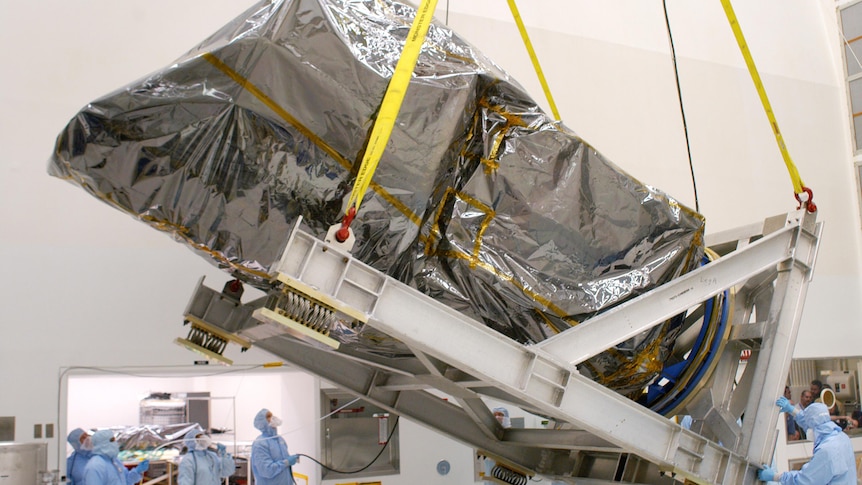
NASA's Swift telescope, a key instrument for studying the universe's most powerful explosions, has fallen back to Earth after 22 years in orbit. The space agency monitored its descent near Indonesia following an unsuccessful rescue mission earlier this year. NASA has not yet determined the extent of the 1.5-tonne telescope's incineration during re-entry.
The Swift Observatory's end came just three months after an ill-fated rescue attempt. The US Space Force verified Swift's re-entry near Indonesia after tracking its trajectory, which had become erratic due to heightened solar activity over recent years. NASA enlisted a private firm to perform an orbit-boosting operation, but the three-armed robotic craft from Katalyst Space faced issues during its July launch and ended up crashing in September.
It remains unclear how much of the 1.5-tonne Swift would survive the atmospheric passage. Initially planned for a two-year study of gamma-ray bursts and exploding stars, the telescope's mission lasted 11 times longer, acting as an early warning system for other telescopes that could delve deeper. Now, NASA is exploring potential rescue missions for the Hubble Space Telescope, which is also vulnerable to solar storms.
Launched in 1990, Hubble's return to Earth is projected for the mid-2030s. NASA is soliciting input from private companies on how to either improve Hubble's orbit, enhance its systems, guide it to a safe re-entry, or implement a combination of these strategies. For this mission to succeed, it must be completed by 2032. Unlike the hurried Swift rescue, NASA has a longer window to explore options for Hubble, expressed NASA's science mission chief, Nicky Fox.
Despite these efforts, Hubble still holds significant scientific value, stated NASA Administrator Jared Isaacman, emphasizing the need to explore all feasible avenues to ensure its continued operation for as long as possible.
Written by urgent.news from ABC News AU's reporting — not their text. Machine-written — may contain errors; check the original before relying on it.
This story
This is one outlet's version. Read the fullest account.