For many, striped bass fishing is a way of life. But the iconic species could face collapse
Scientists who study striped bass say anglers on the East Coast are right to be concerned, and they say years of overfishing are just part of the problem.
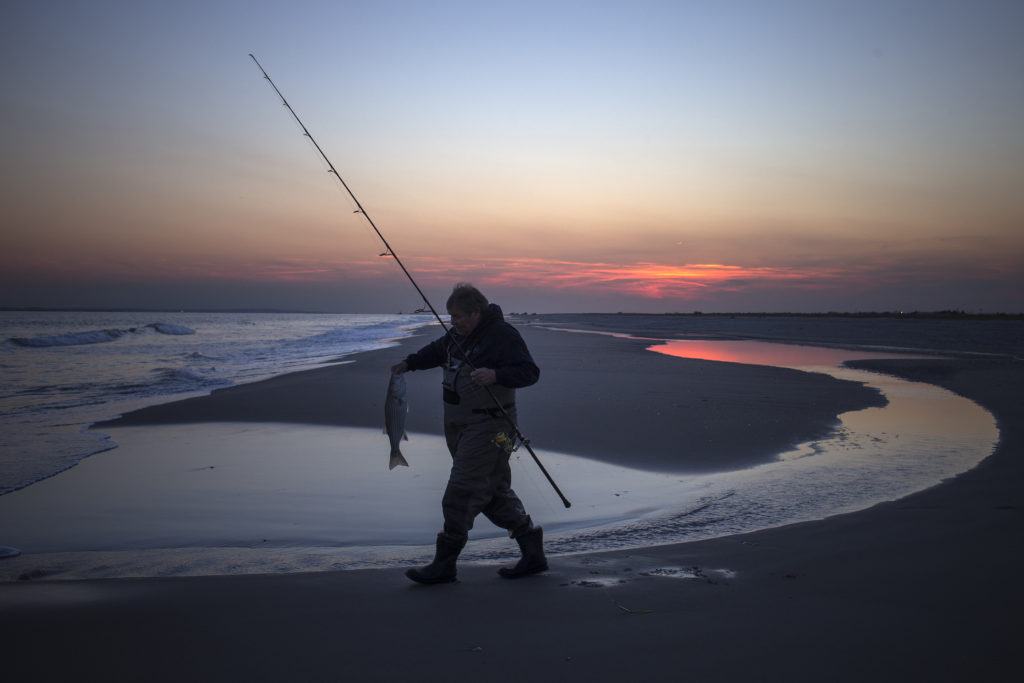
Stripping bass fishing holds a special place in Bill Jakob's heart, as it has for over six decades. Jakob, president of the Montauk Surfcasters Association, recalls the days when he would spend entire nights casting his line in Montauk's crashing waves and reel in eight or nine stripers weighing up to 40 pounds. However, after years of heavy fishing, those big catches ceased. Jakob laments that the good days of catching striped bass are fading away.
Increasingly, fishermen like Jakob are worried that the catch of striped bass is on the brink of collapse. Scientists studying the species agree and attribute the decline to years of overfishing, among other factors. The East Coast's striped bass population has experienced eight consecutive years of poor reproduction in their most critical habitat, the Chesapeake Bay. Along much of the Atlantic coast, the population has also declined.
Several factors, such as warming waters, poor river flow, drought, pollution, and increased predation by seals and sharks, have contributed to the decline. The consequences of losing these higher-level predators could impact an $8 billion fishing industry and thousands of jobs. Some experts suggest that tighter fishing limits might not be enough for striped bass to recover, and stricter action, including a fishing moratorium, may be necessary.
Written by urgent.news from PBS NewsHour Science's reporting — not their text. Machine-written — may contain errors; check the original before relying on it.