World Lemur Day: How can we save these primates’ forest homes?
More than 100 known species of lemurs live in Madagascar. These primates with large eyes, a pointed snout, and long bushy tails are found only in the island country, where they usually live in large groups on trees. Lemurs are one of the world’s most threatened groups of primates, under pressure from the loss of […]
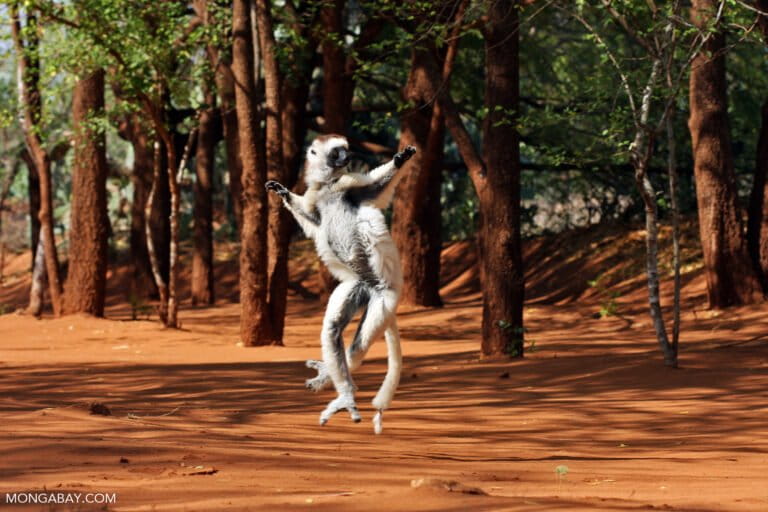
On World Lemur Day, celebrated on the last Friday of October, attention turns to the plight of these unique primates native to Madagascar. With over 100 known species, lemurs are highly threatened by habitat loss and hunting. Two major reserves, Andasibe-Mantadia National Park and the Analamazoatra Special Reserve, house a dozen different lemur species along with a wealth of other endemic wildlife and flora.
However, the landscape between these protected areas has been fragmented since the 1960s due to extensive deforestation for agriculture and cattle grazing, creating isolated forest fragments that hinder wildlife movement and put biodiversity at risk.
In an effort to reconnect these vital habitats, a coalition of researchers, conservationists, and local communities launched a reforestation project in 2023. This initiative aims to restore 150 hectares (370 acres) of native forest, bridging the gap between the two critical lemur habitats. While the project is crucial for lemur conservation, it faces an unexpected challenge - lemurs have a taste for invasive guava fruits, which could jeopardize the reforestation efforts.
These invasive trees, once established, can quickly overrun restored forests, posing a threat to the very success of the reforestation project.
Written by urgent.news from Mongabay's reporting — not their text. Machine-written — may contain errors; check the original before relying on it.