What 500,000 hours of Yellowstone sound can tell us about wolves
Fifty automated recording units scattered across the backcountry of Yellowstone National Park in the U.S. gather roughly 500,000 hours of ambient sound each year. Computer models then sift through those recordings for wolf vocalizations, reports Justin Catanoso for Mongabay. Jeffrey Reed, a linguist and former software engineer, helped launch the Cry Wolf Project in 2023 […]
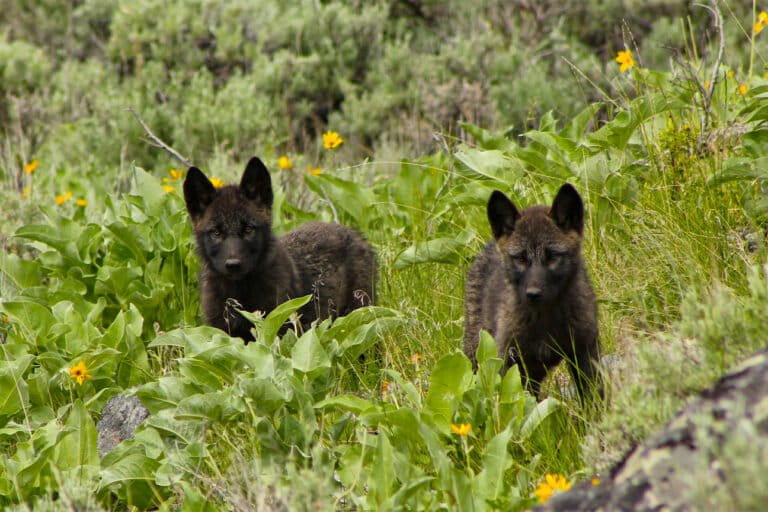
The Yellowstone National Park in the U.S. is home to roughly 500,000 hours of ambient sound each year, collected via fifty automated recording units strewn throughout its backcountry. These recordings are then processed by computer models to identify wolf vocalizations, as reported by Justin Catanoso for Mongabay. Jeffrey Reed, a linguist and former software engineer, played a pivotal role in launching the Cry Wolf Project in 2023, under the larger Yellowstone Wolf Project.
The project employs machine learning to isolate and analyze wolf calls, converting the audio into spectrograms that reveal the structure of individual calls.
To date, the project has amassed over 8,000 continuous hours of wolf recordings, forming what researchers regard as the largest database of wild wolf communication. Traditionally, tracking wolves involved capturing them and attaching radio collars, a process that is both costly and poses risks to both wolves and humans. In contrast, these recorders can be left in the field, making them a more cost-effective and safer method.
Researchers are currently testing whether variations in wolves' voices could be used to identify individual wolves and monitor their movements.
This method is being tested in other parts of the world as well. In northern Italy's Po Valley, an organization called Osservatorio Lupi, or "Wolf Observatory," has placed a dozen recording units near farms and towns. The goal is to eventually use the recordings to alert communities when wolves approach livestock. Researchers are also investigating the potential of similar techniques for monitoring brown bears and along wildlife migration corridors.
So far, Jeffrey Reed has manually annotated roughly one-fifth of the archive to validate the models' findings. However, listening to wolves still requires a substantial amount of effort.
Written by urgent.news from Mongabay's reporting — not their text. Machine-written — may contain errors; check the original before relying on it.