The moon is shrinking. 10,000 cracks on the lunar surface reveal by how much
One new study shows how much the moon has diminished over time.
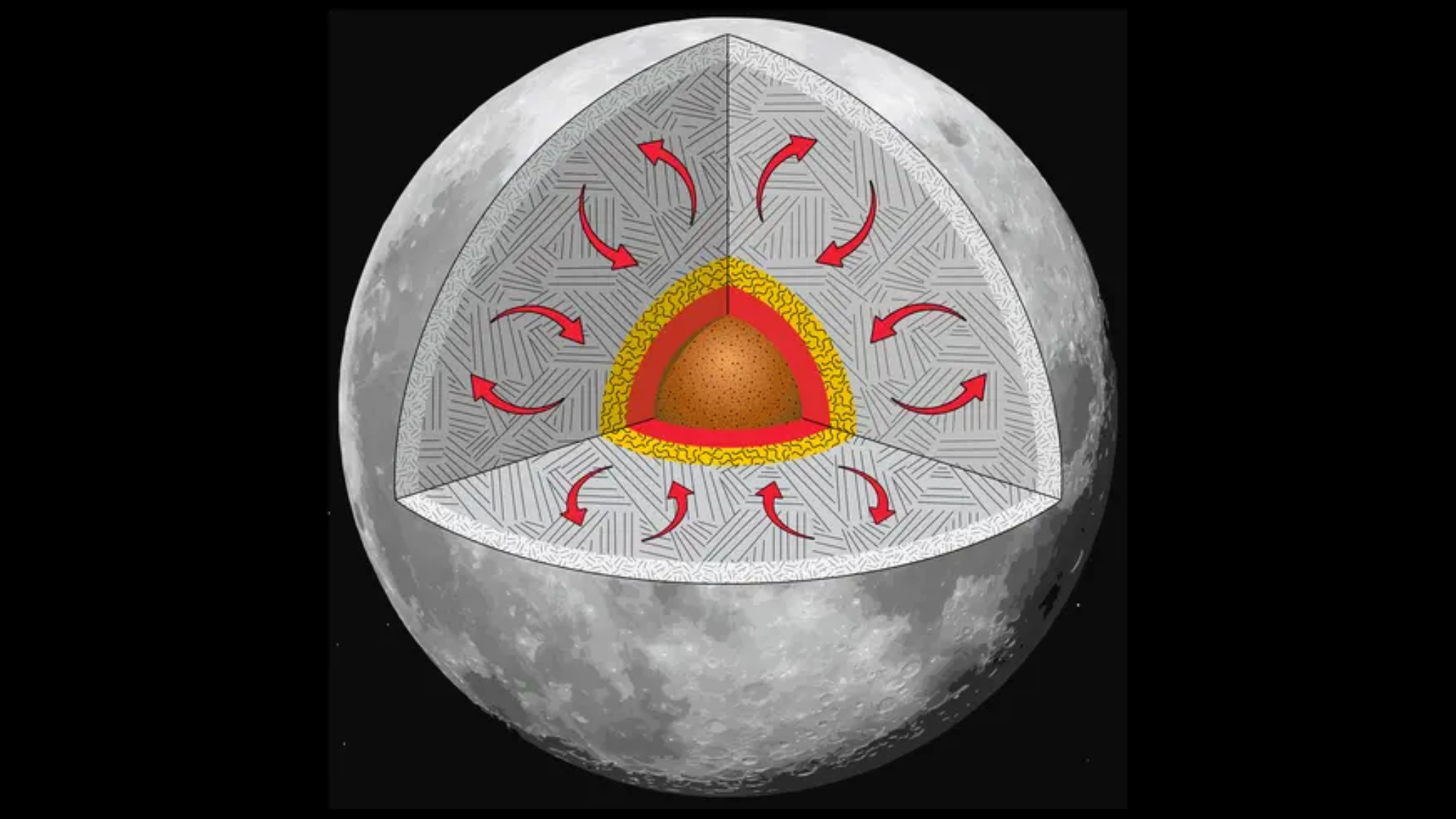
The moon is contracting and shrinking, according to a new study examining over 10,000 fresh cracks across its surface. The moon's cooling and shrinking process began around 4.5 billion years ago when it formed from a massive collision with our early Earth. As it continues to cool, the lunar surface contracts, causing faults and other landforms to form.
Scientists analyzed images captured by NASA's Lunar Reconnaissance Orbiter Camera (LROC) and discovered these cracks, which helped them determine the moon has shrunken by roughly 148 feet (45 meters) over the last 400 to 800 million years. Lead study author Thomas Watters, a geologist at the Smithsonian's National Air and Space Museum, expressed surprise at the sheer number of young faults found in the images.
As the moon's interior continues to cool and contract, more faults are expected to form. The LROC observations revealed various types of cracks, including lobate scarps—long, curved structures that form when the moon's surface contracts—and small mare ridges, or narrow wrinkles, on the moon's dark plains. Unlike Earth, the moon lacks tectonic plates and instead has a single-plate body, with faults and cracks scattered across its surface.
By mapping these thousands of features, researchers are piecing together the moon's history and discovering that some areas have more faults than others, correlating with thicker or thinner crusts. Thick crust areas are more stable and suggest that many of the widespread cracks were caused later in the moon's history when its warm interior contracted and cracked more easily.
Written by urgent.news from Space.com's reporting — not their text. Machine-written — may contain errors; check the original before relying on it.