Agriculture: The growing threat of double-rice cropping
Rice is Pakistan’s second-largest crop after wheat and the country’s largest agricultural export commodity. For decades, the Punjab government consistently enforced a ban on raising rice nurseries before May 20 under the Punjab Agricultural Pests Ordinance, 1959, and its 1960 Rules. Its violation was treated as a cognizable offence. In recent years, however, the emergence of short-duration…
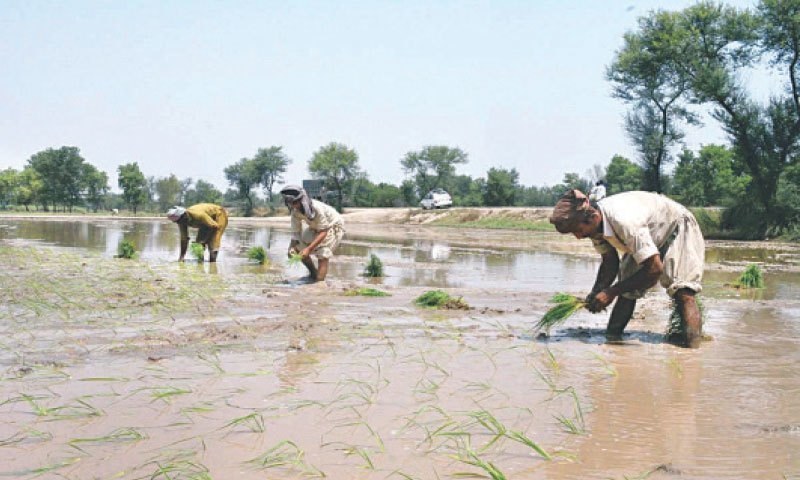
Pakistan's rice industry faces a growing threat from double-rice cropping, a practice where farmers grow two sequential rice crops. This trend has been encouraged by the emergence of short-duration basmati and hybrid rice varieties and the lax enforcement of existing regulations. Double-rice cropping amplifies pest populations and increases groundwater pumping, leading to higher production costs and potential yield losses.
In 2024, hybrid rice varieties failed due to high temperatures, causing significant financial losses for farmers. In response, the federal government proposed a ban on early rice cultivation, which was later lifted by the provincial government. This inconsistent policy has led farmers to seek alternative crops, such as maize or Kissan Basmati, to maximize their yields and income.
The government's failure to enforce regulations and provide clear guidance has left farmers to navigate a regulatory vacuum, resulting in widespread double-rice cropping. With factors like limited crop choices, higher financial returns, and the desire for a three-crop year, farmers are unlikely to abandon this practice voluntarily.
However, the environmental risks, such as increased pest infestations and declining main-crop yields, could make rice cultivation economically unviable in the future.
Written by urgent.news from Dawn Business's reporting — not their text. Machine-written — may contain errors; check the original before relying on it.