Japan readies Martian moon mission to uncover origins of life
Japanese scientists are readying a mission to Mars’s moons to retrieve samples that could help unlock the origins of the Solar System and life on Earth, in what aims to be the first round trip to the Martian region. The uncrewed Martian Moons eXploration (MMX) probe, a collaboration with US and European space agencies as well as numerous universities and tech companies, could also help lay the…
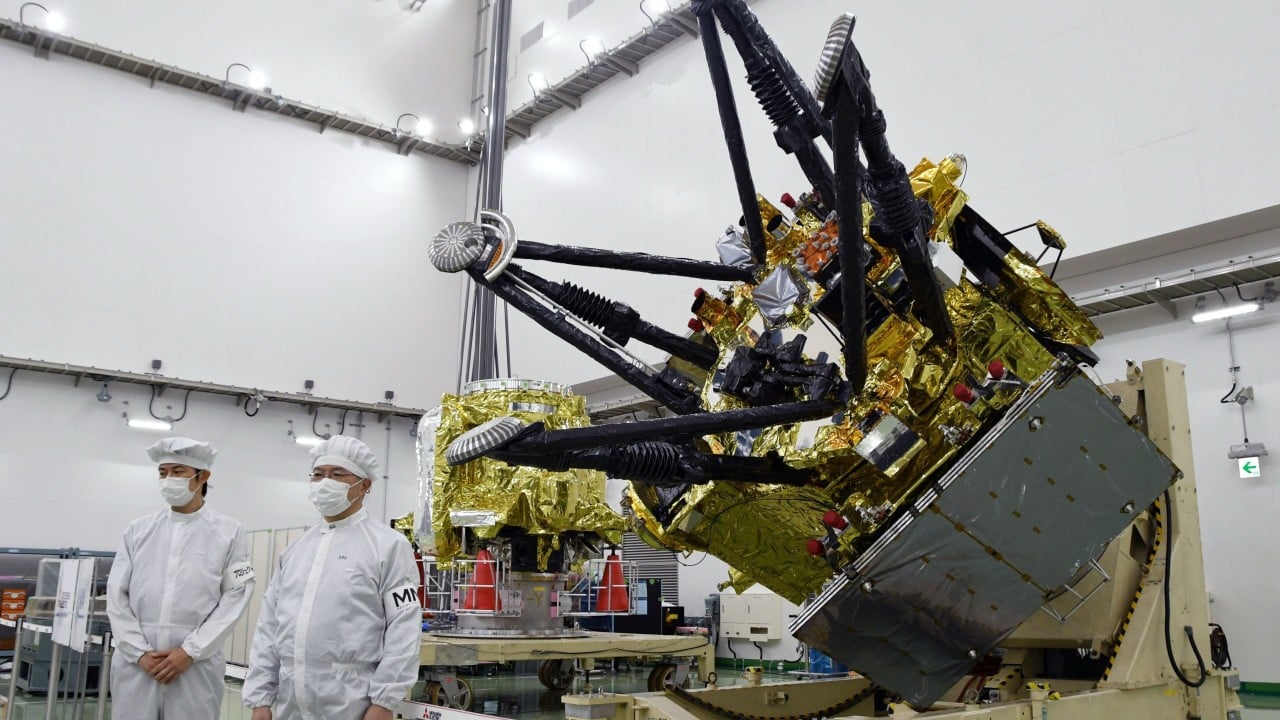
Japanese scientists are gearing up for a groundbreaking mission to Mars’s moons to retrieve samples that could shed light on the origins of the Solar System and life on Earth. The uncrewed Martian Moons eXploration (MMX) probe, a joint effort between Japan, the US, Europe, and numerous universities and tech companies, could also pave the way for future human exploration of the Martian system.
Scheduled to launch from the Tanegashima Space Center on Tuesday at 4.41am, the spacecraft will arrive near Mars around August next year, orbiting Phobos, one of Mars’s moons, before attempting to collect at least 10 grams of material from its surface over three years of operation within the Martian system. A rover named IDEFIX, modeled after the comic book hero Asterix's dog, will first carry out surface observations to ensure a safe landing.
The MMX mission aims to explore the possibility of using Phobos as a "natural space station" to test the requirements for future round trips to Mars – crucial for crewed Mars exploration. In addition to Phobos, the probe will also study Mars's other moon, Deimos, without landing on it, before returning to Earth. JAXA hopes MMX will reveal how Mars and its moons formed, providing key insights into the birth of the Solar System.
One theory for the origin of the Martian moons, the "giant impact" hypothesis, suggests they were formed after a celestial body collided with Mars. Another theory, the "capture" hypothesis, proposes that the moons are asteroids captured by Mars's gravity. Understanding which theory is correct will help scientists unravel how a habitable environment for life might have emerged on terrestrial planets in the Solar System.
Collaborating with France’s National Centre for Space Studies (CNES), the German Aerospace Centre (DLR), NASA, the European Space Agency (ESA), and about 20 universities and technology companies, MMX is a testament to Japan’s expertise in space exploration. Japan has previously brought back samples from space, including the asteroid collected by the Hayabusa-2 mission in 2020.
However, the upcoming MMX mission will be the first to travel close to Mars and return, making it a formidable challenge due to the planet’s strong gravity.
Written by urgent.news from South China Morning Post's reporting — not their text. Machine-written — may contain errors; check the original before relying on it.
This story
This is one outlet's version. Read the fullest account.
- Japan to launch historic round-trip mission to Mars moon kahawatungu.com
- Japan's Mars moon mission aims to bring samples home despite Phobos’ treacherous, low gravity terrain hindustantimes.com
- Japan to launch historic round-trip mission to Mars moon dawn.com
- Japan to launch spacecraft on mission to get samples from Martian moon koreatimes.co.kr
- Japan to launch historic round-trip mission to Mars moon japantoday.com
- Japan to launch historic round-trip mission to Mars moon channelnewsasia.com