Japan to launch spacecraft on mission to get samples from Martian moon
TOKYO — Japan is set to launch a spacecraft on the world's first mission to bring back samples from Phobos, one of the two small, potato-shaped moons orbiting Mars. Scientists hope the mission, which is expected to take five years, will provide clues to how Phobos and its smaller sibling Deimos formed, and hopefully even shed light on the origins of life in the solar system. The Japan Aerospace…
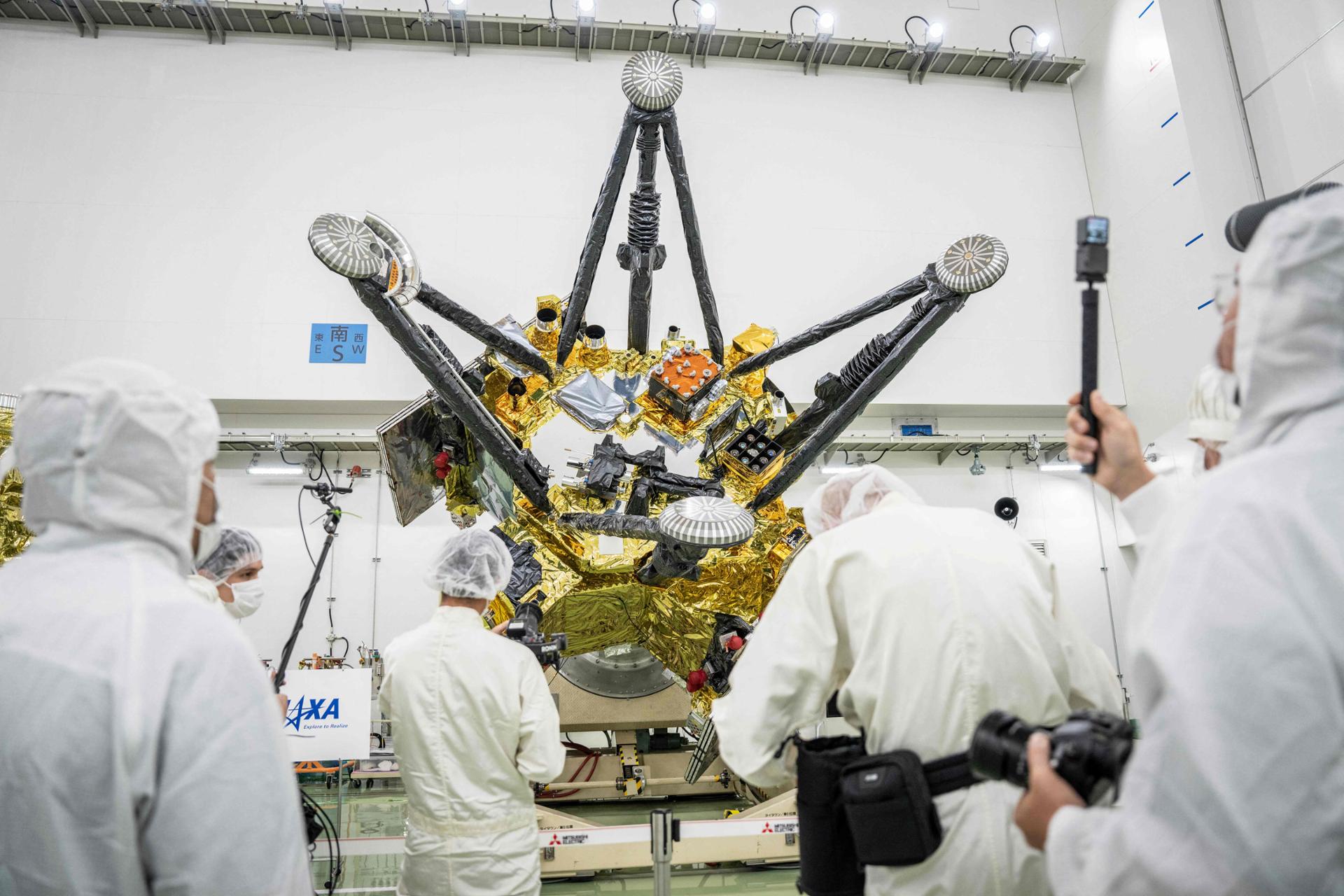
Japan plans to launch a spacecraft on a groundbreaking mission to collect samples from Phobos, one of Mars' two small, potato-shaped moons. The five-year mission, spearheaded by the Japan Aerospace Exploration Agency (JAXA), aims to unravel the mysteries surrounding Phobos' formation and potentially shed light on the origins of life within our solar system.
This ambitious project, set to launch on Tuesday aboard a new Japanese-made H-3 rocket, is the first of its kind, as the world's space agencies turn their focus towards exploring Mars. With the United States, China, and other nations contemplating manned missions to the Red Planet, the samples returned from Phobos could provide invaluable data for future manned endeavors.
Yasuhiro Kawakatsu, the mission's project manager, emphasized the significance of this endeavor. Despite their potential importance, Martian moons have never been fully investigated, he stated. These intriguing celestial bodies are often referred to as the most important unexplored mountains in the solar system.
The MMX (Martian Moons eXploration) mission, a joint effort involving NASA and other national space agencies, will leverage JAXA's cutting-edge technology and communication systems to ensure the mission's success.
Written by urgent.news from The Korea Times's reporting — not their text. Machine-written — may contain errors; check the original before relying on it.
This story
This is one outlet's version. Read the fullest account.