APOD: 2026 October 9 – Stickney Crater
APOD Science APOD APOD: 2026 October 9… Today’s APOD Archive Submissions Index Search Calendar RSS Education About Discuss APOD Astronomy Picture of the Day Discover the cosmos! Each day a different image or photograph of our fascinating universe is featured, along with a brief explanation written by a professional astronomer. Stickney Crater Explanation: Stickney […]
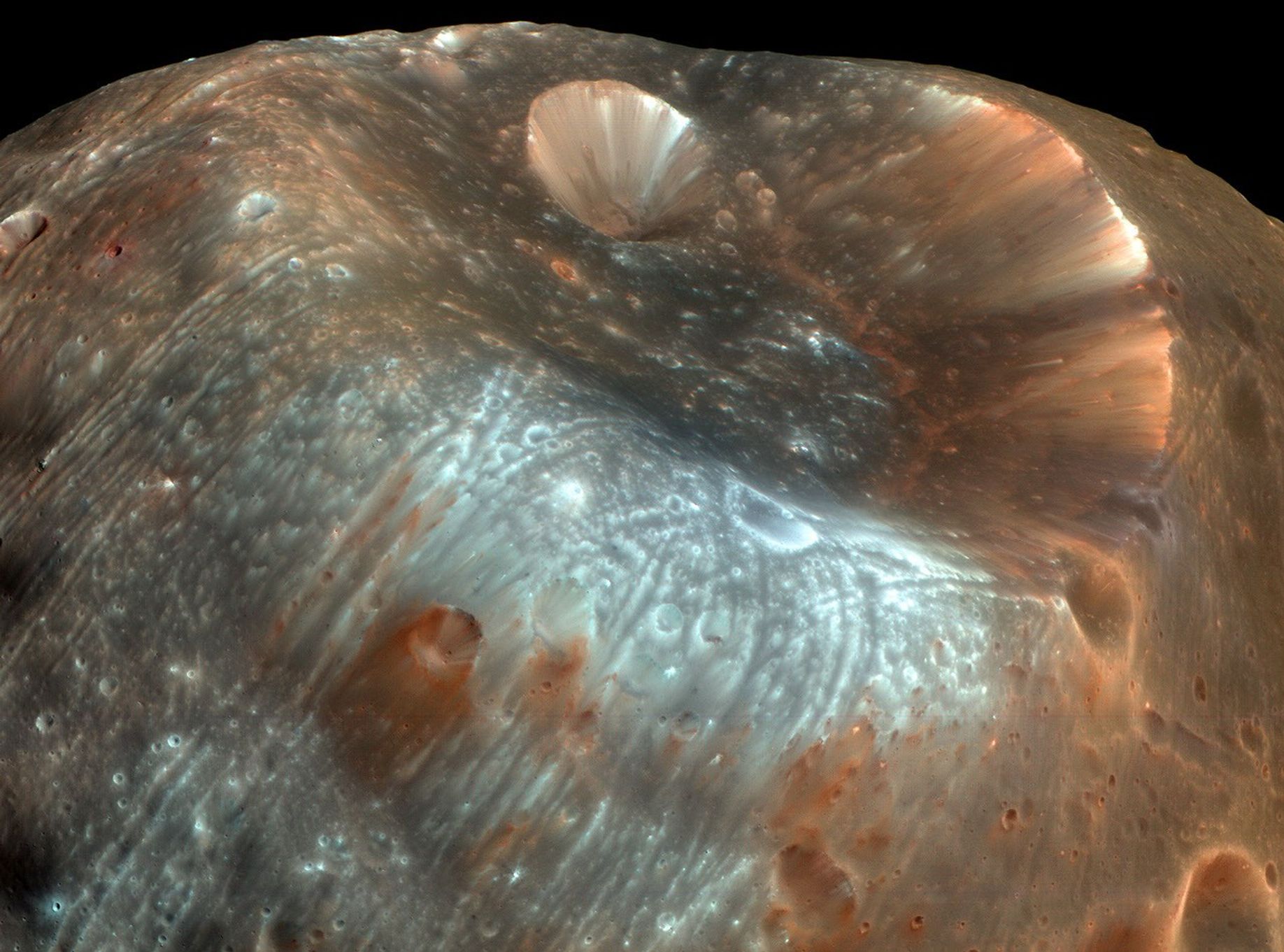
On October 9, 2026, the Astronomy Picture of the Day showcased Stickney Crater, the largest crater on Phobos, one of Mars' two moons. Named after Chloe Angeline Stickney Hall, the mathematician wife of astronomer Asaph Hall who discovered both Mars' moons in 1877, Stickney is nearly half the diameter of Phobos itself. This enhanced-color image, captured by the HiRISE camera onboard the Mars Reconnaissance Orbiter in March 2008, reveals a crater 9 kilometers across, almost half the size of Phobos.
The impact that formed Stickney likely came close to shattering the moon due to its size. Streaks suggest loose material slid down inside the crater walls over time, while light bluish regions near the rim could indicate a relatively freshly exposed surface. The mysterious grooves along the surface may be due to tidal stresses experienced by close-orbiting Phobos or the crater-forming impact itself.
Written by urgent.news from NASA Science's reporting — not their text. Machine-written — may contain errors; check the original before relying on it.
This story
This is one outlet's version. Read the fullest account.
- APOD: 2026 October 9 – Stickney Crater science.nasa.gov