Nobel Prize in Physics awarded for South Pole particle research
Belgium’s Francis Halzen realised that ice at the South Pole could be used to track particles known as neutrinos. Read more: Nobel Prize in Physics awarded for South Pole particle research
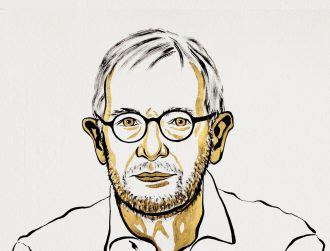
Belgian physicist Francis Halzen, currently a professor at the University of Wisconsin–Madison, has been awarded the Nobel Prize in Physics for his groundbreaking work on the IceCube Neutrino Observatory. The prestigious honour recognises his vision for using ice in the South Pole to track neutrinos, subatomic particles that can travel through Earth without altering their direction or losing energy.
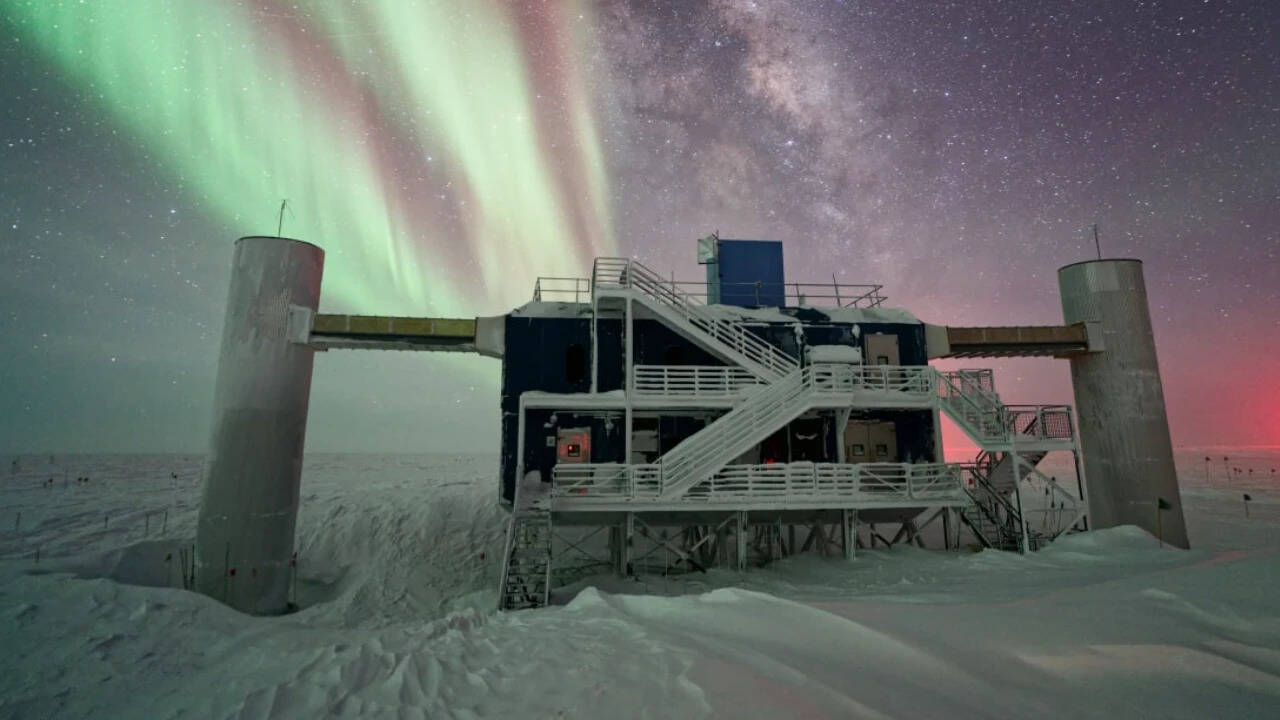
The Royal Swedish Academy of Sciences commended Halzen's scientific leadership and the critical role it played in creating the IceCube Neutrino Observatory - a cubic kilometre of ice fitted with light sensors. Through this technology, researchers can now observe neutrinos from vast energy-rich events in the far reaches of the universe.
Halzen proposed this idea in the late 1980s, noting that neutrino collisions with atomic nuclei generate a flash of light that can be tracked by sensors buried in the clear glacial ice. This approach offers several advantages including minimal interference and a more geologically stable location.
After sharing his concept, Halzen received backing from the scientific community and led preliminary testing of sensors within the ice. Reflecting on his achievement, he remarked, "This is a celebration of a very unusual project. It is difficult to imagine that we could have pulled this off anywhere but at UW–Madison with its unique research infrastructure."
Mark Pearce, chair of the Nobel Committee for Physics, lauded Halzen's contribution, stating, "Francis Halzen has led an international team of researchers and engineers who have provided us with a fantastic instrument. His tenacity and scientific vision has paved the way for a new kind of astronomy."
The Nobel Prize in Physics is the latest in a series of accolades received by Halzen. He was previously awarded the Breakthrough Prize in Fundamental Physics, the inaugural Kavli Prize in Astrophysics, and the Wolf Prize (both in Israel and in the United States).
Written by urgent.news from Silicon Republic's reporting — not their text. Machine-written — may contain errors; check the original before relying on it.
This story
This is one outlet's version. Read the fullest account.
- US, German scientists win Nobel medicine prize for optogenetics breakthrough malaymail.com
- California scientist wins a Nobel Prize, then makes school lunches for his kids gulfnews.com
- California scientist wins a Nobel Prize, then makes school lunches for his kids phys.org
- US, German scientists win Nobel medicine prize for optogenetics sabcnews.com
- California scientist wins a Nobel Prize, then makes school lunches for his kids koreatimes.co.kr
- Belgian physicist awarded Nobel Prize for pioneering work tracking neutrino particles at South Pole cbc.ca
- Belgian physicist Francis Halzen wins 2026 Nobel Prize in Physics english.ajel.sa