US, German scientists win Nobel medicine prize for optogenetics breakthrough
STOCKHOLM, Oct 5 — The Nobel medicine prize was awarded Monday to US psychiatrist and neurologist Karl Deisseroth...
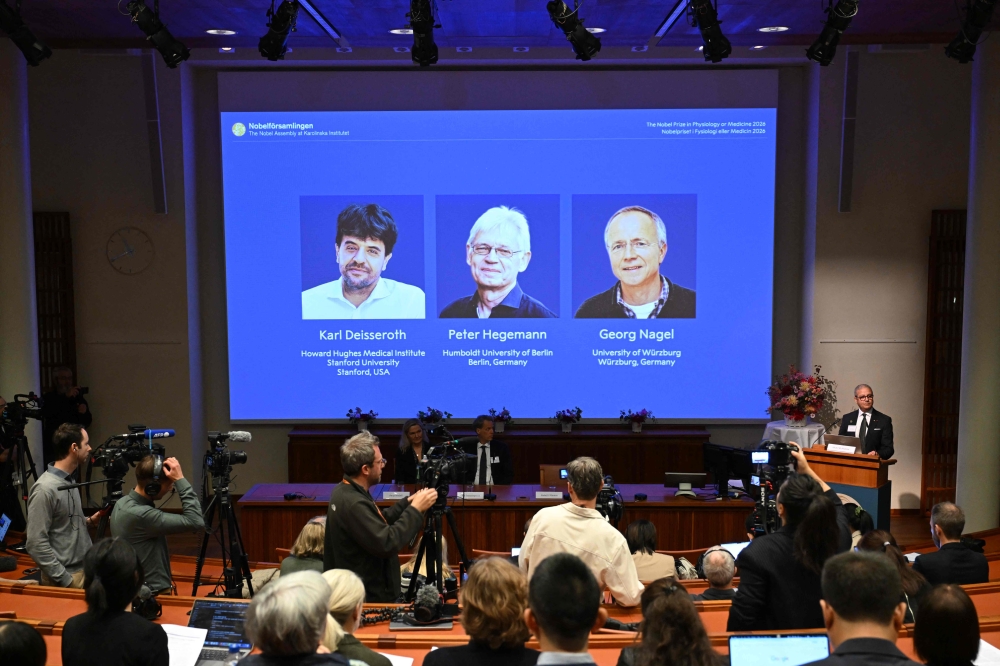
Stockholm, October 5 - The Nobel Prize in Medicine has been awarded to US psychiatrist and neurologist Karl Deisseroth, as well as German scientists Peter Hegemann and Georg Nagel for their groundbreaking work in the field of optogenetics. Optogenetics is a method that utilizes light to control nerve signals, enabling researchers to gain a deeper understanding of how specific cell types contribute to behaviors such as learning, fear, addiction, and movement.
The Nobel Assembly praised the trio for their discovery of a molecular switch for nerve cells, which has paved the way for researchers to switch individual neural circuits on or off in a brain, unveiling neural circuits that govern various memories, feelings, and behaviors. This technique holds promise in clinical medicine, potentially aiding in the restoration of sight for those with visual impairments and offering hope for treatments of neurological and psychiatric disorders like Parkinson's disease and epilepsy.
Nobel committee chair Per Svenningsson highlighted that optogenetics has fundamentally changed our understanding of the brain, with new discoveries emerging daily. The laureates were informed of their award via phone call, with Deisseroth expressing his exhaustion and almost instant awakening upon being woken.
Written by urgent.news from Malay Mail's reporting — not their text. Machine-written — may contain errors; check the original before relying on it.