Research roundup: 6 cool science stories we almost missed
Also: Spooky action at the LHC, Ice Age psychoactive use, yeast for building homes on Mars, and more.
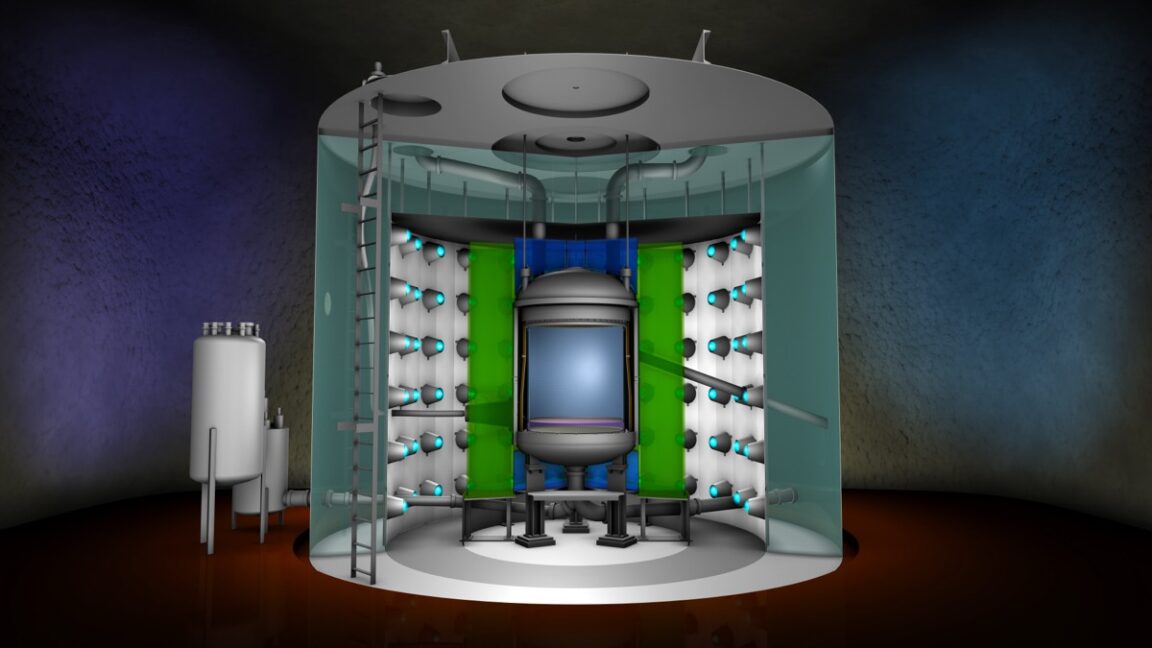
Every month, a selection of intriguing yet overlooked scientific stories is showcased. September's highlights include potential evidence of dark matter at the LUX-ZEPLIN detector, entangled Z bosons detected at the Large Hadron Collider, the possible use of psychoactive substances during the Late Pleistocene, and a detailed explanation of a telescope design credited to Galileo.
The dark matter mystery, which constitutes about 85 percent of our universe's matter, primarily involves weakly interacting massive particles (WIMPs). Directly detecting these elusive particles has been a struggle for decades. However, the LUX-ZEPLIN detector, located deep within a South Dakota gold mine, may have captured a hint of this dark matter.
This tantalizing discovery was presented at the 2026 TeV Particle Astrophysics conference in Japan, with a preprint published on arXiv. Although the signal is below the level required for a confirmed discovery and could be a statistical fluke, the team has not ruled out the possibility. They continue collecting data, alongside the XENONnT detector at the Gran Sasso National Laboratory in Italy, and China's PandaX detector, which is under construction.
Written by urgent.news from Ars Technica's reporting — not their text. Machine-written — may contain errors; check the original before relying on it.
Also reported by 1 other outlet
- Research roundup: 6 cool science stories we almost missed arstechnica.com