Ancient Pottery Reveals the Earliest Known Traces of Chocolate East of the Mississippi, Painting a Picture of Connection in the Americas
A new archaeological discovery suggests that people in present-day Georgia have feasted with cacao for 1,000 years
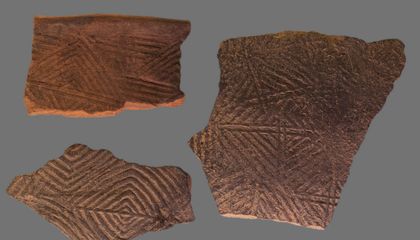
The discovery of ancient pottery in Georgia has revealed the earliest known traces of cacao east of the Mississippi River, providing insight into the interconnectedness of ancient cultures in the Americas. Adam King, an archaeologist at the University of South Carolina, explains how the Indigenous world of the Southeast was an international one, with people deeply connected.
Cacao, which yields beans used to create chocolate, originated in Mesoamerica with evidence of its domestication dating back to around 5,300 years ago in Ecuador. By 1500 B.C.E., the Olmecs of southern Mexico were crafting fermented chocolate drinks. The Maya even utilized cacao beans as currency in the Classic Period, and by 1050 C.E., chocolate was prevalent throughout the region. However, limited evidence had previously identified cacao in North America.
The new findings, published in PLOS One on August 26, show that cacao had somehow reached Etowah by the 11th century. Today, Etowah, located northwest of Atlanta, is home to six earthen monuments built by Native Americans during the pre-Columbian Mississippian period. These impressive structures, with the tallest once soaring about 64 feet, were constructed using red clay between 1000 and 1550 C.E.
Archaeologists believe the construction of these mounds was highly ritualistic, potentially symbolizing the creation of the Earth.
While the exact means by which cacao reached Etowah remains unclear, it is possible that a trader or traveler brought it there directly, or that it was traded from person to person until its arrival. Alternatively, the cacao may have traveled from the Gulf Coast, the Caribbean, or Florida. Despite the absence of evidence of Mesoamerican influence beyond maize cultivation in Etowah, the discovery highlights the extensive trade networks across the continent.
Written by urgent.news from Smithsonian's reporting — not their text. Machine-written — may contain errors; check the original before relying on it.