India Emerges As A Global Space Power, Report Highlights Moon Missions And Human Spaceflight Ambitions
New Delhi: India is emerging as a global space power , with lunar exploration, solar research and human spaceflight plans expanding its capabilities, according to an article in Tanzania’s The Guardian newspaper. The article traces India’s journey from Aryabhata in 1975 to missions including Chandrayaan-3 and Aditya-L1. It says the space programme is also supporting innovation, manufacturing,…
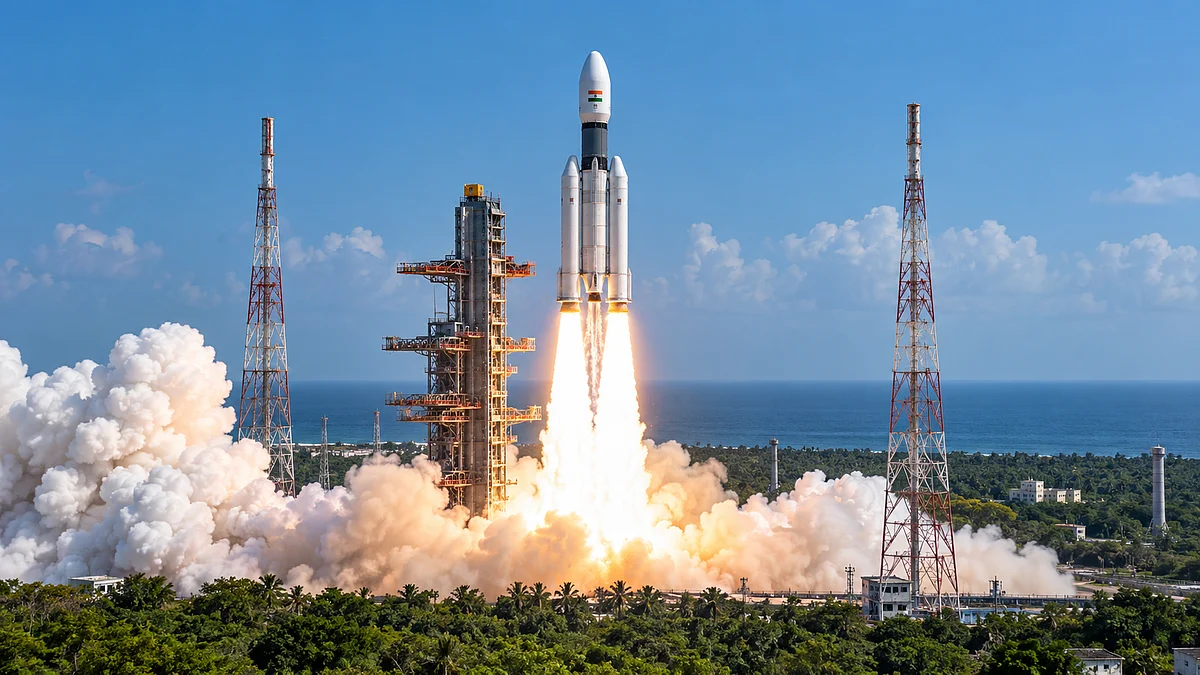
India is rapidly becoming a prominent space power, as highlighted by a recent article in Tanzania's The Guardian. The nation's space program has expanded significantly since its inception with Aryabhata in 1975, now encompassing lunar exploration, solar research, and human spaceflight ambitions.
The Indian Space Research Organisation (ISRO) has achieved notable milestones, including Chandrayaan-3's successful Moon landing in 2023 and the upcoming Chandrayaan-4 mission, which aims to collect and return lunar samples. The article underscores that such missions demand advanced technologies like multiple launches, docking, lunar ascent, and safe re-entry.
India's SpaDeX mission has showcased orbital docking capabilities, a crucial step towards more ambitious space operations. The country is also working towards human spaceflight through the Gaganyaan program, which involves a phased testing strategy. Uncrewed missions will validate essential systems before sending astronauts, such as crew escape mechanisms, life support systems, parachutes, and re-entry technologies.
The Bharatiya Antariksh Station's first module is set for launch in 2028, with plans to establish the full station by 2035, with aspirations for a crewed lunar mission by 2040.
Aditya-L1, another notable mission, will focus on studying solar activity and space weather from an orbit about 1.5 million kilometers from Earth. Meanwhile, the Venus Orbiter Mission, or Shukrayaan, planned for March 2028, will investigate Venus's atmosphere, surface, and subsurface, providing valuable insights into planetary evolution and habitability.
Beyond exploration, India's space sector contributes significantly to everyday life. Satellite technology enables weather forecasting, farming, navigation, communications, and disaster preparedness. Earth observation data aids in monitoring forests, water resources, urban expansion, and environmental risks. Satellite connectivity also improves healthcare access in remote areas.
The article emphasizes that India's space economy is projected to grow fivefold to $44 billion by 2033, driven by private sector involvement and startups. Space technology benefits various industries, including electronics, sensors, materials, and manufacturing. Technology transfers from the space sector help Indian businesses enter advanced supply chains, fostering commercial opportunities while advancing scientific progress and boosting domestic manufacturing.
Written by urgent.news from Free Press Journal's reporting — not their text. Machine-written — may contain errors; check the original before relying on it.
This story
This is one outlet's version. Read the fullest account.