From Chandrayaan-3 To Gaganyaan, Tanzanian Newspaper Highlights India's Rise As Global Space Power
New Delhi, Oct 2: India is rapidly emerging as a global space power. From Aryabhata in 1975 to Chandrayaan-3, Aditya-L1, Gaganyaan and the planned Bharatiya Antariksh Station, India has progressed from the early use of space technology for development to the frontiers of scientific exploration and is now moving towards human spaceflight, according to an article in Tanzania’s The Guardian…
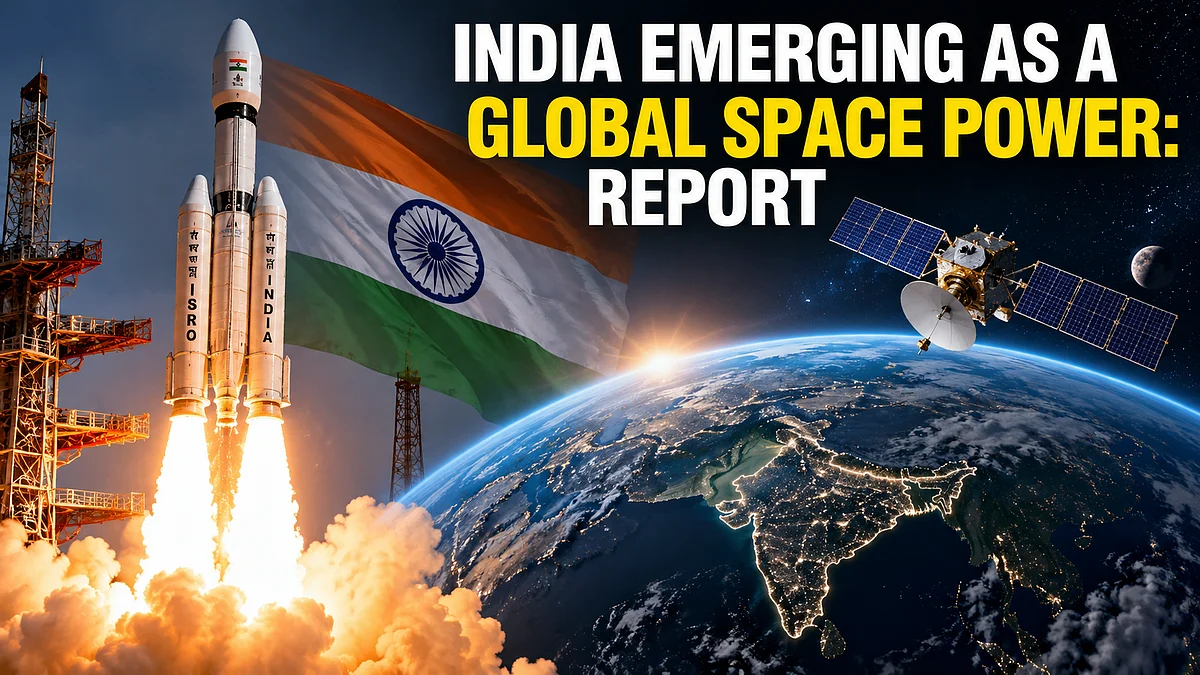
New Delhi, October 2: India is swiftly becoming a prominent space power, as highlighted in an article published by Tanzania’s The Guardian newspaper. The piece outlines the country’s remarkable journey, beginning with the launch of Aryabhata in 1975, progressing through Chandrayaan-3, and reaching new heights with Aditya-L1, Gaganyaan, and the future Bharatiya Antariksh Station.
While India’s space program primarily revolves around rockets and satellites, its impact extends far beyond, acting as a catalyst for innovation, industrial development, employment, scientific research, and socio-economic transformation. Space technology now plays a crucial role in numerous sectors, including communications, agriculture, education, healthcare, disaster management, environmental protection, navigation, and everyday economic activities.
India’s commitment to advancing space capabilities has been demonstrated by the successful execution of Chandrayaan-3 in 2023, which showcased the nation’s proficiency in achieving a highly intricate lunar landing. Following this milestone, the Aditya-L1 mission expanded India’s scientific reach towards the Sun. SpaDeX, another notable achievement, showcased orbital docking capabilities.
The Gaganyaan program is currently preparing the country for human spaceflight, marking a significant leap in India’s space ambitions. Furthermore, the proposed Chandrayaan-4 mission aims to land on the Moon, collect samples, and return them to Earth, a task that necessitates a level of technological sophistication far greater than a mere landing alone.
India’s ambitions extend beyond lunar exploration, with the planned Shukrayaan (Venus Orbiter Mission) scheduled for launch in March 2028. This mission aims to study Venus’s atmosphere, surface, and subsurface, providing valuable insights into planetary evolution and habitability. Looking ahead, Aditya-L1, positioned approximately 1.5 million kilometers from Earth, will continue to study solar activity and space weather.
Meanwhile, Gaganyaan, as the flagship human spaceflight program, represents India’s transition towards human spaceflight. The program adopts a phased approach, employing uncrewed missions to validate critical systems before embarking on crewed flights.
Satellite technology developed through India’s space program has become indispensable for various terrestrial applications, ranging from weather forecasting and agriculture to navigation, communications, disaster management, and environmental monitoring. Earth-observation satellites can identify vulnerable areas before natural disasters, while satellite communications support emergency response in remote regions.
By monitoring forests, water bodies, urban expansion, pollution, and weather patterns, space-based data contributes to climate action and disaster preparedness. Satellite communications also enhance access to healthcare in remote areas, enabling medical education and training through augmented and virtual reality.
Beyond its societal benefits, India’s space program is driving economic growth across various sectors. Innovations in advanced electronics, sensors, materials, communications, navigation, and manufacturing, developed by organizations like ISRO’s Semi-Conductor Laboratory, are finding applications beyond space missions. Over 900 application-specific integrated circuits (ASICs) developed for railway locomotives exemplify the cross-sector impact of space investments.
Consequently, space exploration creates a multiplier effect by generating knowledge, intellectual property, engineering expertise, manufacturing capabilities, and new commercial opportunities that extend beyond the realm of space.
Written by urgent.news from Free Press Journal's reporting — not their text. Machine-written — may contain errors; check the original before relying on it.