NASA Adds New Science Investigations for Moon Base
NASA selected three new scientific investigations and their payload suites to advance our knowledge of the Moon and help pave the way for building humanity’s first lunar outpost, Moon Base. The suite of science instruments and technologies was selected through NASA’s Payloads and Research Investigations on the Surface of the Moon (PRISM) program and will […] The post NASA Adds New Science…
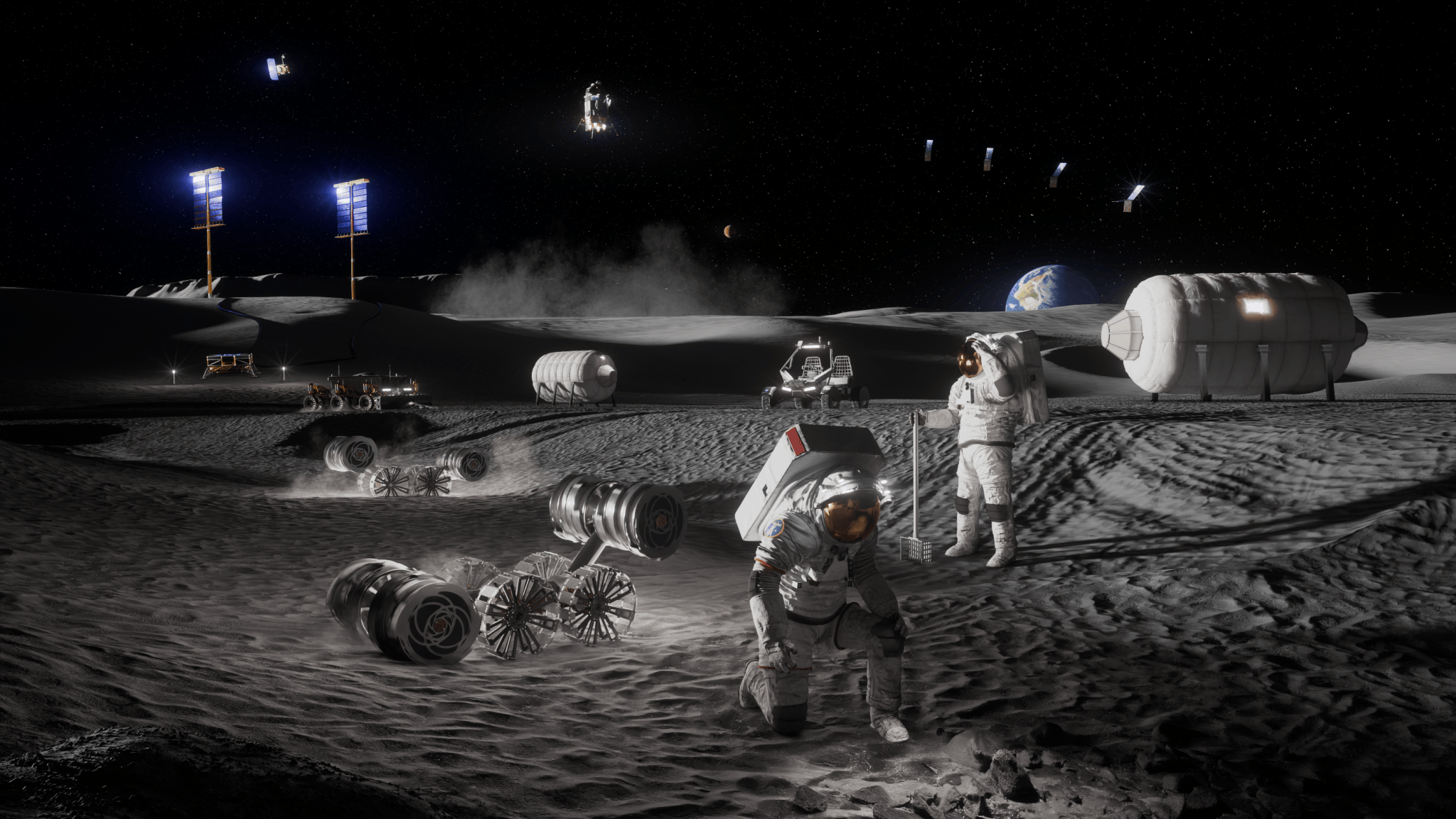
NASA has announced the addition of three new scientific investigations to support the establishment of a lunar outpost, known as Moon Base. These investigations, selected through the Payloads and Research Investigations on the Surface of the Moon (PRISM) program, will be launched using the Commercial Lunar Payload Services (CLPS) initiative.
The objectives of these missions include understanding lunar resources, mapping natural shelters, and assessing environmental hazards to ensure a safe and sustainable human presence on the Moon.
The first payload, Lunar Environment Monitoring Station – South Pole (LEMS-SP), is an autonomous instrument suite designed to monitor the lunar environment and hazards. It will track volatiles, detect micrometeoroids, and use a short-period seismometer to assess seismic events, providing critical data to ensure the physical safety of future lunar habitats.
The second payload, Geophysical Investigation for Mapping Lunar Interior (GIMLI), will search for subterranean lava tubes at the Marius Hills Pit on the lunar surface. These natural underground spaces could offer future astronauts protection from extreme temperatures and harmful radiation, providing valuable information for planning Moon Base habitats.
Lastly, the Distribution of Ice and Surface Characteristics Observatory (DISCO) will measure ice hidden in lunar micro-cold traps and study the lunar surface's behavior under various conditions. This information will help NASA design safe surface operations and develop technologies to utilize lunar ice resources for the Moon Base.
Brad Bailey, director of the Exploration Science Strategy Integration Office at NASA's Science Mission Directorate, emphasized that these PRISM selections strengthen NASA's ability to deliver transformative science to the lunar surface. NASA is increasing its cadence of lunar missions to build the Moon Base, delivering science investigations and technology payloads that contribute to American scientific preeminence and future human exploration of Mars. For more information, visit the provided link.
Written by urgent.news from NASA Science's reporting — not their text. Machine-written — may contain errors; check the original before relying on it.