Help Overlap Zoo Reveal Cosmic Dust
Galaxies, vast collections of billions of stars, gas, and dust held together by gravity, are scattered across the immensity of space. But every so often, a coincidence occurs: Two galaxies line up from our point of view on Earth (or from a space telescope) and appear to overlap in the sky. These rare overlapping galaxies […] The post Help Overlap Zoo Reveal Cosmic Dust appeared first on NASA…
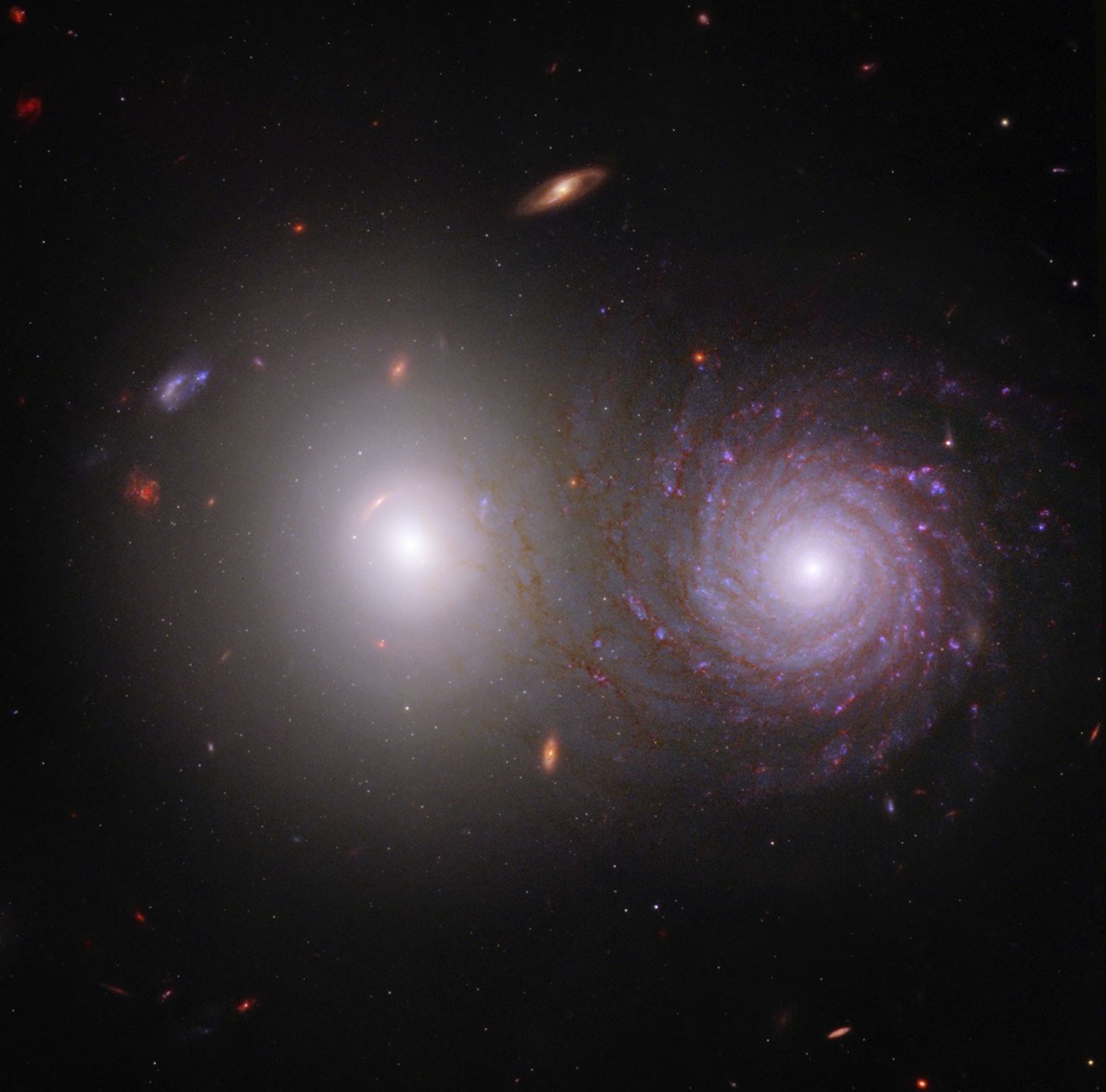
The cosmos houses massive collections of stars, gas, and dust known as galaxies. Occasionally, galaxies line up in a way that allows us to view them overlapping from our perspective on Earth. This alignment presents an opportunity for astronomers to study the dust contained within these distant galaxies. NASA's new Overlap Zoo project aims to catalog these cosmic events to better understand the distribution and properties of dust within galaxies.
When a background galaxy aligns with a nearer galaxy, the backlit dust creates dark silhouettes, much like shadows on a screen. Analyzing these silhouettes allows researchers to map the distribution of dust in galaxies and understand how it affects starlight traveling through space. Such measurements can even assist astronomers in refining estimates of the distances to faraway objects.
However, before astronomers can delve into studying these galaxy pairs and their dust, they must first locate them. Overlap Zoo, a citizen science initiative, invites volunteers to assist in this search. As new and more advanced observations of galaxies abound, classifying every potential galaxy pair becomes increasingly challenging for astronomers. Volunteers in Overlap Zoo will be presented with images identified by previous Galaxy Zoo participants as potentially containing overlapping galaxies.
The project will guide volunteers on how to verify the presence of galaxy pairs in these images, classify key features of each galaxy, and mark their outlines. No prior experience is necessary; participants simply need curiosity and a few minutes of their time. By classifying images, volunteers will contribute to building the first large-scale catalog of galaxy pairs suitable for dust studies, significantly improving the accuracy of astronomical estimates.
Visit Overlap Zoo to begin classifying galaxies today and help unlock the secrets hidden in these rare cosmic alignments.
Written by urgent.news from NASA Science's reporting — not their text. Machine-written — may contain errors; check the original before relying on it.
Also reported by 1 other outlet
- Help Overlap Zoo Reveal Cosmic Dust science.nasa.gov