Help Overlap Zoo Reveal Cosmic Dust
Galaxies, vast collections of billions of stars, gas, and dust held together by gravity, are scattered across the immensity of space. But every so often, a coincidence occurs: Two galaxies line up from our point of view on Earth (or from a space telescope) and appear to overlap in the sky. These rare overlapping galaxies […]
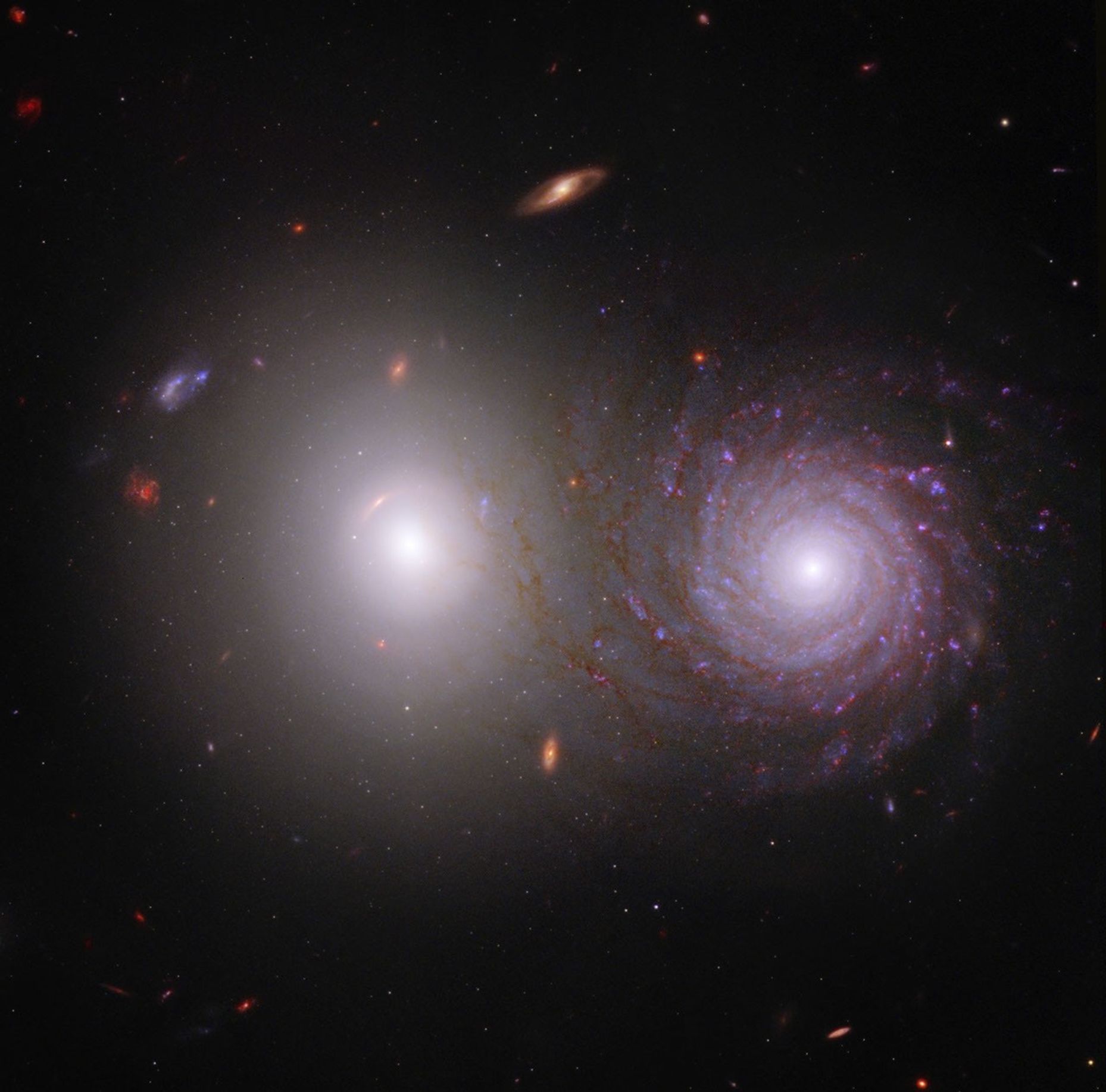
Galaxies, colossal assemblies of millions or billions of stars, gas, and dust, bound together by gravity, populate the vast reaches of the universe. Occasionally, a cosmic event occurs where two galaxies align as seen from Earth or a space telescope, resulting in an overlapping appearance in the night sky. These infrequent occurrences provide astronomers with an opportunity to study the dust contained within one of these distant celestial bodies.
NASA's new Overlap Zoo project aims to harness the power of citizen science to identify and study these overlapping galaxies. In such pairs, the background galaxy acts like a cosmic flashlight, illuminating the dust in the nearer galaxy. This backlit dust manifests as dark silhouettes, akin to shadows on a screen. By examining these silhouettes, researchers can create detailed maps of dust distribution within galaxies and gain insights into how dust affects starlight traveling throughout the cosmos. Such measurements can even aid astronomers in refining distance estimates to faraway objects.
However, before delving into the analysis of galaxy pairs and their dust content, it is crucial to locate these rare alignments. Overlap Zoo seeks public assistance in this search. With an ever-increasing number of galaxy observations, it is becoming increasingly challenging for astronomers to classify every candidate galaxy pair.
Trevor Butrum, project lead and graduate student for Overlap Zoo, emphasizes the value of volunteers in compiling the most comprehensive and accurate catalog of overlapping galaxy pairs for further examination.
As a participant in Overlap Zoo, users will be presented with images previously identified by volunteers from the Galaxy Zoo project as potentially containing overlapping galaxies. The project provides guidance on verifying the presence of galaxy pairs, categorizing essential features of each galaxy, and outlining their boundaries.
This process involves learning on the job, with users able to classify as many images as they desire. No prior experience is necessary, only curiosity and a willingness to dedicate a few minutes of time to the cause.
Written by urgent.news from NASA's reporting — not their text. Machine-written — may contain errors; check the original before relying on it.
This story
This is one outlet's version. Read the fullest account.
- Help Overlap Zoo Reveal Cosmic Dust science.nasa.gov