2,100-year-old shipwreck with 122 types of Roman tableware found in Turkey
Marine archaeologists discovered an ancient shipwreck near Adrasan, Turkey, containing thousands of ceramic tableware pieces. The cargo, believed to originate from Rhosus, dates back approximately 2,100 years. Researchers have recovered various ceramic types, revealing insights into ancient tableware and packing methods. The discovery highlights the historical significance of Rhosus in tableware…
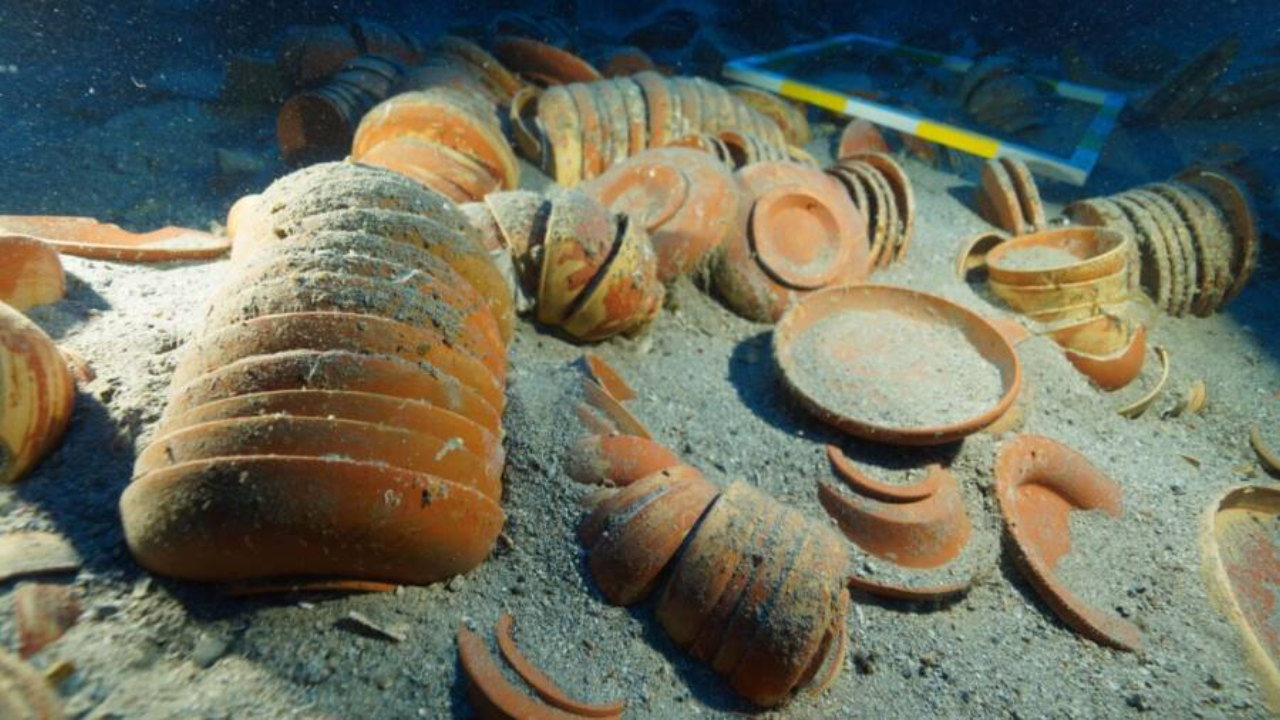
In a remarkable discovery off the coast of Turkey near Adrasan, marine archaeologists have uncovered the remnants of an ancient cargo ship that sank over 2,100 years ago. The ship, destined for Rome, was packed with an astounding 122 varieties of Roman tableware, showcasing the diversity and opulence of Roman dining during that era. The vessel was loaded with ceramic plates, bowls, and serving dishes that were in high demand throughout the Roman Empire, as indicated by a report by All Things Interesting.
The researchers believe that the cargo originated from the ancient port city of Rhosus, now known as Arsuz in modern-day Turkey. Rhosus was renowned for its production of high-quality tableware, which was so sought-after that even the Roman statesman Marcus Tullius Cicero mentioned ordering it in a letter from 50 B.C.E. The shipwreck was found at depths ranging from 140 to 18 feet, and the excavation process involved the use of underwater robotic systems to assist the marine archaeologists in their work on the ocean floor.
The ship, dating back to 2,100 years ago, contained thousands of ceramics that had been packed together for transport across the Mediterranean. To protect the delicate pieces from breaking during the voyage, the researchers discovered that the ceramics were packed with clay between them before being placed inside crates. This packing method not only prevented breakage but also contributed to the preservation of the tableware for centuries, providing valuable insights to modern scholars.
The discovery of this shipwreck holds significant importance, as it offers a detailed glimpse into the variety of tableware available in the ancient world and sheds light on how ceramics were distributed during that time. The region of Rhosus, known for its fine tableware production, played a crucial role in the Mediterranean's fine dining scene. The newly found tableware shipment, although the specific buyer remains unknown, underscores the thriving maritime economy of the time.
Other recent discoveries in Turkey's waters further highlight the region's rich maritime history. A similar shipwreck filled with hundreds of well-preserved ceramics was recovered, and another 1,500-year-old wreck was found carrying 10,000 ceramic plates. Additionally, a 1,100-year-old ship that sank with jugs of olive oil aboard adds to the treasure trove of archaeological finds in the area.
Written by urgent.news from Times of India's reporting — not their text. Machine-written — may contain errors; check the original before relying on it.