Tiersterben: Dutzende tote Jungwale an Argentiniens Küste gespült
Gestrandete Walkadaver an der Küste der argentinischen Halbinsel Valdés bieten einen traurigen Anblick. Wissenschaftler untersuchen die Ursache - und haben einen Verdacht.
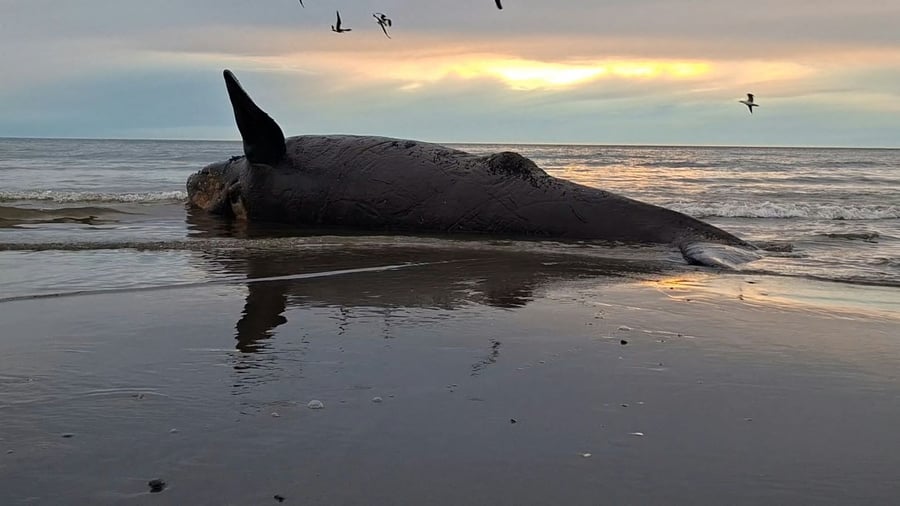
Dozens of baby humpback whales have washed up on the beaches of Argentina's Valdés Peninsula. Authorities suspect a bacterium that can cause systemic illnesses in the calves of southern right whales as the likely cause, but no evidence of human involvement has been found so far. The provincial government is investigating the strandings alongside scientists.
The affected species are the southern right whales (Eubalaena australis), also known as southern right whales. These animals migrate to Argentina's coasts, Brazil, and Uruguay to breed and raise their young. They are often found in large numbers in the north Patagonian waters. Marine biologist Mariano Coscarella from the Argentine Research Council Conicet spoke of a "relatively high mortality rate" to "Página/12" newspaper.
However, the provincial government stressed that whales die every year, so the recent cases could be part of the natural population dynamics. The number of deceased animals may fluctuate from season to season and even within a season. The bacterium infestation is currently the working hypothesis, and similar phenomena have been observed in other parts of the world.
The Valdés Peninsula, covering around 4,000 square kilometers in north Patagonia, is a crucial breeding ground for large marine mammals. Thousands of seabirds, elephant seals, and numerous whale species gather in the coastal waters during the reproductive and nurturing periods. The peninsula's meeting point of two ocean currents creates nutrient-rich waters. In 1999, the peninsula was declared a UNESCO World Heritage Site.
Written by urgent.news from Handelsblatt's reporting — not their text. Machine-written — may contain errors; check the original before relying on it.