GOP senators not happy with Trump's embrace of Xi after China helped Iran
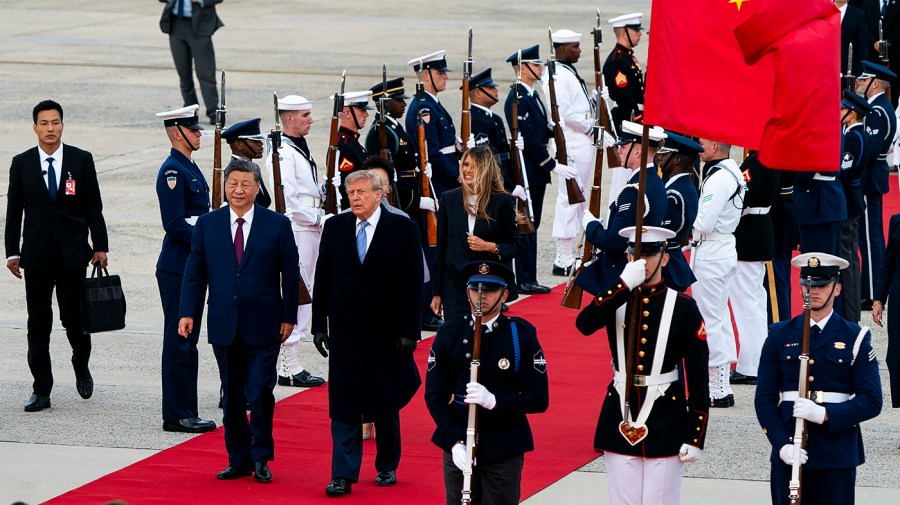
Welcome to The Hill's Defense & NatSec newsletter {beacon} Defense &National Security Defense &National Security The Big Story GOP senators not happy with Trump's embrace of Xi after China helped Iran Republican senators are dismayed over President Trump’s lavish welcome of Chinese President Xi Jinping to the U.S. after the discovery that Iran used...
In late August, US Treasury Secretary Scott Bessent declared an "economic D-Day" against Iran, vowing to launch "the single greatest financial offensive ever mounted against an adversary." This analogy is peculiar, as the campaign's effectiveness hinges on China, a once-ally now seen as a strategic rival. For the Trump administration's "zero-leakage" policy to succeed, foreign financial institutions must monitor and police their own customers.
Achieving "total isolation" of the Iranian regime requires Chinese banks to bear much of the burden of sanctions enforcement. Prior to the Strait of Hormuz closing, China purchased around 90% of Iran's oil exports. Years of sanctions have already shifted much of Iran's oil trade to an alternative system that operates independently of the dollar, SWIFT, and traditional correspondent banks.
This trade now predominantly occurs through Iran's rahbar shadow-banking system, which processes tens of billions of dollars annually, often derived from oil and petrochemical exports. Currently, Iran settles these sales mainly in renminbi. Earlier US sanctions have influenced major Chinese banks even when China officially opposed them.
Following Russia's invasion of Ukraine in February 2022, the offshore branches of Industrial and Commercial Bank of China (ICBC) halted issuing dollar-denominated letters of credit for Russian commodity purchases. The Bank of China (BOC) and its Singapore branch also restricted financing to Russian entities and oil. China's largest banks—its policy banks and the "big four" state-owned commercial banks—are the most challenging enforcement targets.
Their global operations necessitate access to dollar liquidity and correspondent banking relationships, which hold greater value than any business dealings with sanctioned Iranian entities. These banks' dependence on the global dollar system gives them strong incentives to limit their exposure to US sanctions. The real challenge lies in China's vast network of smaller regional banks and credit cooperatives, numbering over 3,800 urban and rural institutions.
As the US threatened Chinese banks with secondary sanctions, Russian companies turned to these smaller institutions with minimal ties to Western markets. Iran's sanctioned transactions involve foreign-exchange houses, layers of offshore shell companies, and accounts in the UAE, Hong Kong, and Singapore. Chinese oil buyers, particularly independent refiners in Shandong, do not need to send money to an Iranian bank; they can pay an offshore front company in renminbi.
This money can then be used to pay Chinese suppliers on Iran's behalf or transferred elsewhere. On paper, these transactions may appear unrelated to Iran. Chinese banks processing such payments might see them as routine transfers between Hong Kong and Dubai firms. However, uncovering hidden links to Iran in such accounts and transactions is a daunting task.
Banks must scrutinize beneficial ownership, counterparties, and payment purposes more closely. The US Treasury is now shifting this investigative burden onto foreign banks. In April, the Office of Foreign Assets Control urged financial institutions to enhance due diligence for independent teapot oil refineries in China, threatening secondary sanctions against any institutions found complicit.
The Trump administration's latest sanctions campaign, Operation Economic Outcast, could potentially cut foreign banks off from the dollar-based system. China's anti-money laundering regime already requires banks to conduct "know your customer" verification and maintain financial crime controls. In 2022, the Financial Action Task Force rated China's anti-money laundering regime as "largely adequate."
Written by urgent.news from Free Malaysia Today's reporting — not their text. Machine-written — may contain errors; check the original before relying on it.
This story
This is one outlet's version. Read the fullest account.
- Trump’s Iran sanctions have a China problem freemalaysiatoday.com
- Trump rejects Iran's 7-day ceasefire offer, expects to resume bombing post midterms timesofindia.indiatimes.com
- US-Iran war LIVE: Trump rejects Iran's ceasefire proposal, expects renewed bombing after US midterms — Report livemint.com
- Trump warns Xi against Iran support as Beijing pledges no assistance nst.com.my