Chinese scientists find first evidence of ancient nose-chopping punishment for cattle thieves
Stealing someone’s cattle is a serious crime, and in many places, the thief would end up in jail. However, ancient Chinese justice could result in a truly horrific form of mutilation: the amputation of the nose. This harsh consequence has been well-documented by historians as one of the infamous “five punishments” from the penal system of the Xia dynasty (2070 BC–1600 BC). Until now, no physical…
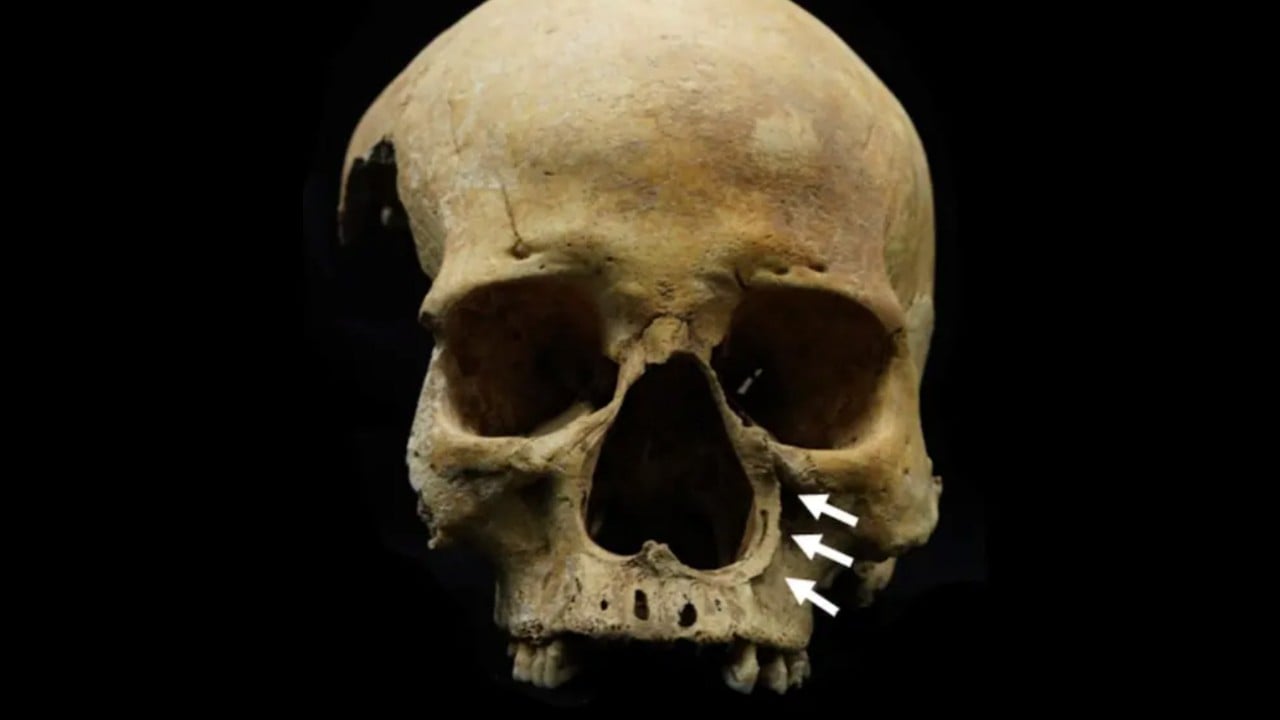
In a groundbreaking discovery, Chinese scientists have uncovered the earliest evidence of a medieval punishment involving nose amputation for cattle thieves. This gruesome form of retribution, one of the infamous "five punishments" from the Xia dynasty, had never before been physically documented. Researchers from China and the United States discovered a female skeleton dating between 1298 and 1404, originating from either the Yuan or Ming dynasties.
Professor Qian Wang of Texas A&M University, a lead author of the study, confirmed that the amputation was not due to disease or trauma. Instead, the evidence suggests that the punishment was a form of cruel retribution. Despite the severe injury, the woman survived for several years after the punishment, defying the subpar medical practices of the time. She was buried face down, a practice that likely served as a form of social ostracisation, separating her from society both during and after her life.
The team noted that the skeleton had a wider nasal opening than usual, indicating that a nose had been sliced off from the bottom up. While textual records support the use of this punishment, such findings may have been overlooked due to the fragmentary nature of many skeletal remains. The researchers hypothesised that the woman might have worn a prosthetic to conceal her mutilation, a theory supported by the healing bones around the wound.
Despite her attempts to return to normal life, the woman likely faced discrimination from the community due to her unique circumstance. This discovery sheds new light on the harsh realities of ancient justice and survival.
Written by urgent.news from South China Morning Post's reporting — not their text. Machine-written — may contain errors; check the original before relying on it.