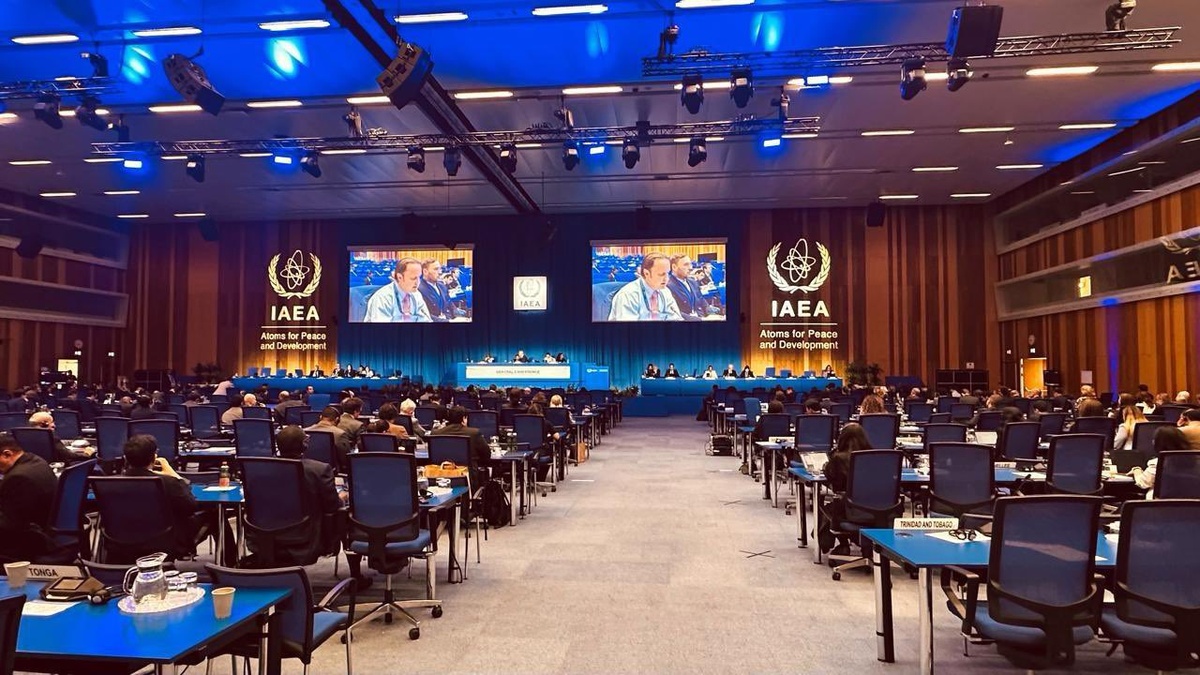
Sybiha: IAEA resolution on Ukraine's nuclear safety secures 63 affirmative votes
The resolution on nuclear safety, security, and safeguards in Ukraine, adopted during the 70th session of the IAEA General Conference, received 63 affirmative votes, Foreign Minister Andriy Sybiha announced.
On Friday, polling stations in Russia's Far East started operating early, signaling the start of a three-day election that the ruling United Russia party is expected to win. This marks the first parliamentary vote since Russia's invasion of Ukraine in February 2022, which has led to the deaths of hundreds of thousands. The conflict has also hit home harder this year, with Moscow Mayor Sergei Sobyanin reporting that Russia had destroyed dozens of Ukrainian drones targeting Moscow the previous night.
Voting, covering 450 seats in the Duma, Russia's lower house of parliament, will continue until Sunday at 6:00 PM GMT. Kamchatka peninsula and Chukotka, located in Russia's Pacific region, are among the first time zones to begin casting ballots. Russia's President, Vladimir Putin, has been in power since 1999, and his United Russia party has dominated Russian politics since the early 2000s. The Kremlin has banned criticism of its Ukraine campaign, and the tightly controlled elections are expected to yield little surprises.
United Russia is the sole party facing the others, which support most of Putin's policies and the war in Ukraine - the Communist Party, the nationalist LDPR, A Just Russia and New People. Yabloko, which advocated for an end to the fighting, was barred from running just before the vote. One of Yabloko's leading figures, Lev Shlosberg, was imprisoned for criticizing the war.
Among those voting is 20-year-old Muscovite Apostol, who admitted, "I don't see the point in voting for anyone but United Russia because they will win anyway." Political expert Tatiana Stanovaya noted that Putin often compares his political situation to those in European countries, emphasizing that the election is important for him both personally and politically. Ahead of the vote, Putin urged Russians to demonstrate support for the troops and to show a united front against those who wish to weaken Russia.
The war has strained Moscow's ties with the West, imposing severe economic sanctions. With no public debate and protests banned, the vote will serve as a barometer for the Kremlin's understanding of public frustration with the conflict, as it shows no signs of ending. This year, the war has affected even further regions of Russia, including the Urals and Siberia, causing billions of rubles in damage and civilian casualties.
Putin's political opponents, who have been exiled, called upon anti-Kremlin Russians not to boycott the election but to vote against United Russia, offering recommendations on who to support in each region.
Written by urgent.news from IOL's reporting — not their text. Machine-written — may contain errors; check the original before relying on it.
This story
This is one outlet's version. Read the fullest account.
- Russia votes as Putin’s party dominates election amid Ukraine war iol.co.za
- State Duma candidate for Russia’s Green Party Yulia Kuznetsova disappears in Moscow meduza.io
- General Staff: Russia has lost 1,514,910 troops in Ukraine since Feb. 24, 2022 kyivindependent.com
- 'Election without meaningful competition': Russia’s results won't measure support for Putin or war france24.com
- Russia holds nationwide Duma elections as war in Ukraine reshapes vote euronews.com
- Russia stages sham State Duma vote in occupied Ukraine amid coercion english.nv.ua
- Russia’s parliamentary election: Who’s on the ballot, and why it matters aljazeera.com