Mystery of the golden tongues: 13 mummies reveal secrets of ancient Egypt
Dubai: Thirteen ancient Egyptian mummies were found with golden tongues placed inside their mouths at an archaeological site in Minya, an extraordinary discovery offering a glimpse into beliefs about death, speech and the afterlife more than 2,000 years ago. The find at Oxyrhynchus, known locally as Al Bahnasa, has returned to attention following a recent report highlighting discoveries made…
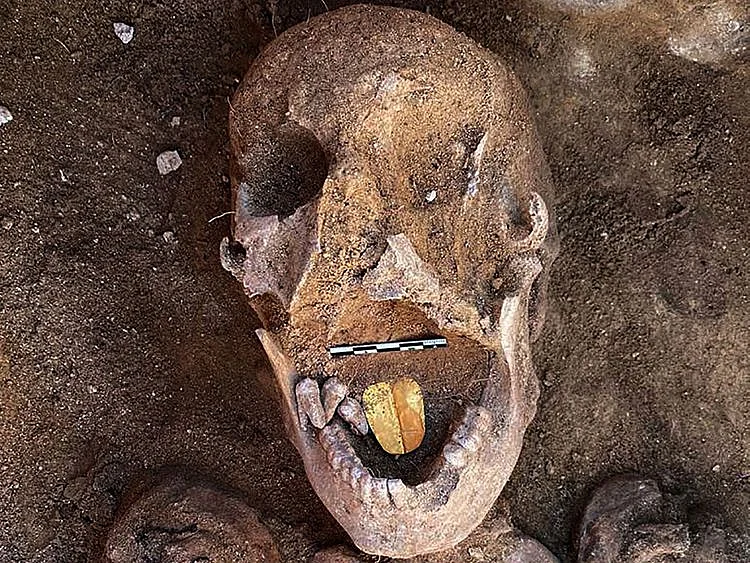
In an extraordinary archaeological discovery in Minya, Egypt, 13 ancient Egyptian mummies were found with golden tongues placed inside their mouths, offering a unique insight into beliefs surrounding death, speech, and the afterlife over 2,000 years ago. The site, known as Oxyrhynchus or Al Bahnasa, has re-emerged in the spotlight following recent excavations by an Egyptian-Spanish archaeological mission.
These mummies belong to the Ptolemaic period, which spanned from approximately 304 BC to 30 BC. Archaeologists theorize that the golden tongues may have been imbued with the intention to enable the deceased to speak in the afterlife, as gold held immense significance in ancient Egyptian culture due to its durability and association with the gods and immortality.
The discovery of the golden tongues was accompanied by a wealth of other artifacts, including 29 amulets tied to ancient Egyptian religious beliefs. These included scarabs and symbols linked to deities such as Horus, Thoth, and Isis. Additionally, gold foil was discovered covering the fingers and toes of some of the deceased, potentially serving a protective role in the afterlife.
Within one mummy, a heart scarab was found, an integral element of ancient Egyptian funerary practices associated with the fate of the deceased after death.
The excavation also unveiled a chamber adorned with remarkably well-preserved colorful wall paintings. One scene portrays the tomb's owner, identified as Wen Nefer, alongside family members offering offerings to Egyptian gods. Another painting depicts Anubis preparing a mummy adorned with gold, alongside representations of Osiris, Isis, and Nephthys.
The presence of the tomb owner and his family in such scenes had not been documented at Al Bahnasa before, providing a glimpse into evolving religious and social practices during the Ptolemaic and Roman eras.
The site's significance lies in its chronological range, spanning multiple periods of Egyptian history, from the Old Kingdom to the Roman era. This makes it crucial for understanding the shifting religious and social customs throughout these epochs. While the story of the 13 golden tongued mummies is not novel, renewed focus on these discoveries emphasizes the potential of such seemingly small cultural artifacts to yield profound insights into ancient Egyptian beliefs about life, death, and the afterlife.
Written by urgent.news from Gulf News's reporting — not their text. Machine-written — may contain errors; check the original before relying on it.