A Genetic Mutation May Help Explain Lung Cancer in Nonsmokers
A rare genetic mutation could help to explain why some people who don’t smoke still develop lung cancer.

A new study published in Science reveals that a genetic mutation in the EGFR gene could significantly increase the risk of lung cancer in nonsmokers. Researchers from the Dana Farber Cancer Institute, led by Dr. Jaclyn LoPiccolo, discovered that individuals with this mutation had a 25-fold higher risk of developing lung cancer compared to those without it, regardless of whether they smoked.
The risk was even higher for nonsmokers - carriers of the mutation faced a 60-fold higher risk than nonsmokers who did not have the mutation. This finding is particularly relevant given that smoking is the primary cause of lung cancer, and around 10-20% of lung cancer cases in the U.S. each year are diagnosed in people who never smoked.
The research adds to the growing understanding of what drives lung cancer in non-smokers, as prior studies have identified other genetic mutations linked to lung cancer in this group. The EGFR T790M mutation, first discovered in a European family in 2005, is rare, occurring in about one in 15,000 people across the U.S. However, the rate is higher in Southern Appalachia, where scientists believe the mutation first arrived in the U.S. from England or Ireland over 200 years ago.
LoPiccolo and her team used a large genetic database from 23andMe to determine the impact of the mutation on lung cancer. With a database of this size, the team was able to estimate the population-level risk associated with the mutation and assess how the risk varied among different groups. Although the mutation is rare, about one in 2,000 people in Southern Appalachia carry it.
The study opens the door to considering genetic testing as part of lung-cancer screening. Currently, lung cancer screening is recommended for smokers with a history of heavy smoking and above a certain age, but such screening is not advised for nonsmokers. However, understanding genetic risk, along with other environmental factors, could be valuable in assessing an individual's lung cancer risk.
Litterman, the executive director of the Susan Wojcicki Foundation, which funded the study, points to BRCA genetic testing for breast cancer as a potential model for lung cancer. Implementing genetic testing for carriers of the EGFR T790M mutation could lead to more frequent screening, earlier detection of cancer, and better outcomes for those diagnosed.
Patients like Frank McKenna, a 66-year-old personal trainer diagnosed with Stage IV lung cancer despite never smoking or being exposed to environmental risk factors, have already benefited from the discovery of their EGFR T790M mutation. Early detection through targeted therapy not only improved McKenna's quality of life but also provided hope for his 33-year-old daughter, who also carries the mutation.
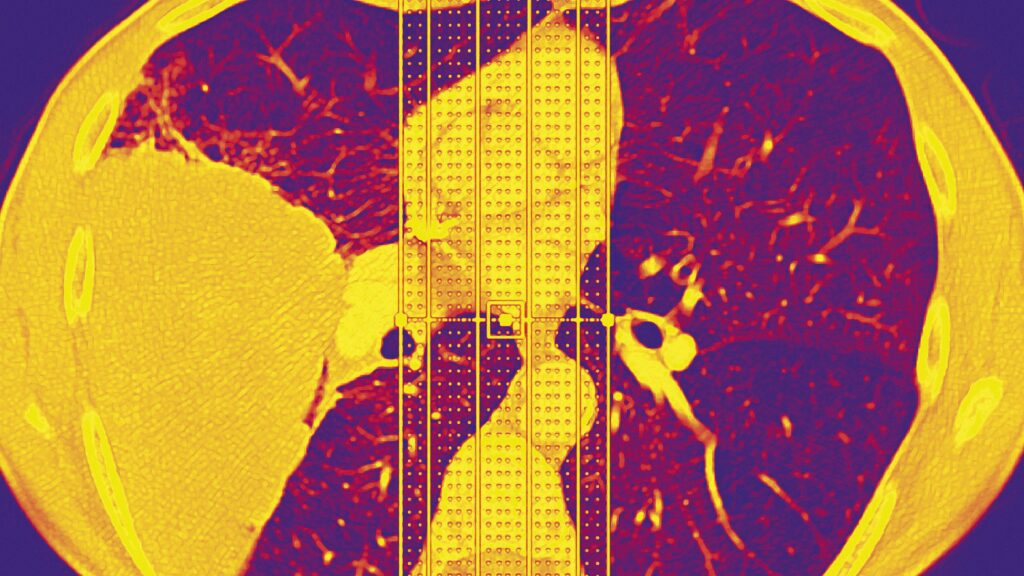
LoPiccolo is leading a study called INHERIT, which aims to personalize lung-cancer screening plans for individuals with inherited genetic risks, including the EGFR T790M mutation. By taking into account family history, smoking history, genetic profiles, and environmental exposures, the study will help determine the optimal frequency of low-dose CT scans for early detection and improved treatment outcomes.
Written by urgent.news from Time's reporting — not their text. Machine-written — may contain errors; check the original before relying on it.
This story
This is one outlet's version. Read the fullest account.