Scientists develop new method for deciphering ancient scrolls
Even a handheld XRF scanner is sufficient to determine most promising scrolls for further analysis.
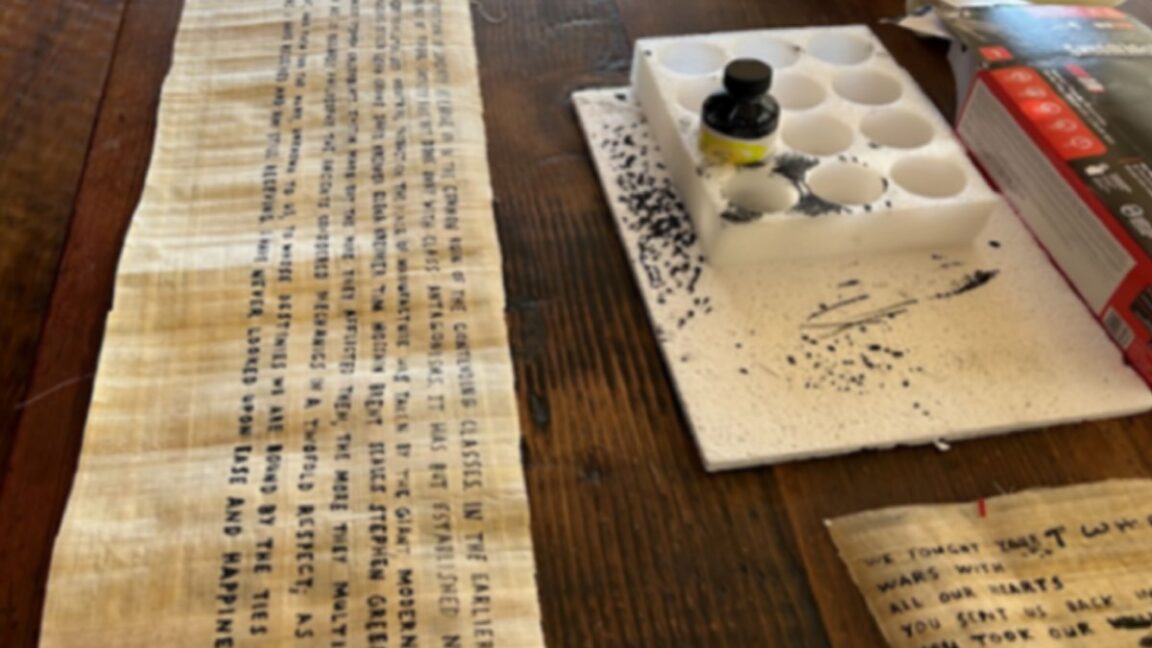
Scientists have developed a novel approach to deciphering ancient scrolls, specifically the Herculaneum scrolls, which are 2,000-year-old papyri that are too fragile to be physically unrolled. The Vesuvius Challenge, an ongoing project, has combined digital unwrapping with crowdsourced machine learning to tackle this issue. To validate a screening method for identifying scrolls written in lead-based ink, a team of researchers created their own modern papyrus scrolls and charred them to mimic the original conditions.
The process is detailed in a new paper published in the journal PLoS ONE. Mount Vesuvius' eruption in 79 AD destroyed several cities, including the luxurious Herculaneum, which housed valuable scrolls made from papyrus. Discovered in the 1700s, these scrolls remained buried until being excavated from a room believed to have housed the personal library of philosopher Philodemus.
Despite opening a few fragments, scholars identified Greek philosophical texts and Latin works. However, the numerous rolled-up scrolls were deemed unreadable due to their fragility.
Written by urgent.news from Ars Technica's reporting — not their text. Machine-written — may contain errors; check the original before relying on it.
This story
This is one outlet's version. Read the fullest account.
- Scientists develop new method for deciphering ancient scrolls arstechnica.com