A 66-Million-Year-Old Feather Trapped in Dinosaur Poop Might Help Explain Why Some Birds Survived Mass Extinction
Discovered in Montana in 2016, the cherry-size coprolite contains feathers, bones and evidence of the bird's last meal before the creature was eaten by a theropod
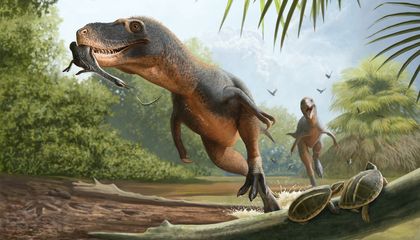
In 2016, a paleontologist named David DeMar discovered a fossilized piece of dinosaur poop in northeastern Montana. To his surprise, he found a tiny, well-preserved feather embedded within the coprolite, a small piece of fossilized dung, measuring about the size of a cherry. This remarkable find was analyzed using non-invasive and non-destructive methods, such as micro-CT scans and 3D surface scans.
The analysis revealed two bone fragments that likely belonged to a flightless bird called a hesperornithiform, which was similar to a modern loon or grebe. These birds were related to the group of birds that survived the mass extinction event 66 million years ago, but the hesperornithiforms belonged to a separate branch and became extinct during the same event that wiped out the dinosaurs.
Interestingly, the coprolite also contained multiple feathers and feather fragments, making it the first time scientists have discovered such exquisite plumage in a coprolite. The primary feather found measures about 0.37 inches long and appears to have been water-repellent. Researchers also discovered a smaller feather that they believe came from the bird's wing.
Both feathers have unique features, such as square shafts with lightweight, sponge-like cores encased in harder outer layers, which have never been seen in any other feather from the Mesozoic era. The next-oldest known example of a sponge-like feather core is about ten million years younger than the specimens found in the coprolite.
The researchers also found two smaller, fuzzy body feathers that were more primitive in nature, which might have been crucial for insulating the birds from the cold. These body feathers likely helped the hesperornithiforms survive the cold temperatures but were not sufficient to keep them warm during the environmental catastrophe triggered by the Chicxulub impact event.
The impact sent enormous amounts of dust, sulfur, and soot into the atmosphere, blocking sunlight and plunging Earth into a global winter, which led to the starvation of many animals. The fluffy body feathers might have been "good enough to keep [the birds] warm during the greenhouse world of the Mesozoic, but not good enough to keep them warm during this environmental catastrophe that was triggered by [the Chicxulub] impact event," said lead author Jingmai O'Connor.
The fossil also contained two small fish scales, likely from a gar, which was probably the bird's last meal. This discovery suggests that the bird consumed the fish shortly before it was swallowed by the dinosaur that produced the coprolite. The study highlights that coprolites may be a largely untapped source of information about ancient birds and their prey.
Scientists may want to examine fossilized feces already in museum collections, as very few animals can digest keratin, the tough, fibrous material that makes up bird feathers.
Written by urgent.news from Smithsonian's reporting — not their text. Machine-written — may contain errors; check the original before relying on it.