Lebensmitteleinkauf: Was Rabatt-Apps so beliebt macht – und was kritisiert wird
Rabatt-Apps versprechen exklusive Sparvorteile. Verbraucherschützer sehen genau darin eine Benachteiligung. Ein großer Teil der Kunden nutzt die Apps, hat daran jedoch oft auch etwas auszusetzen.
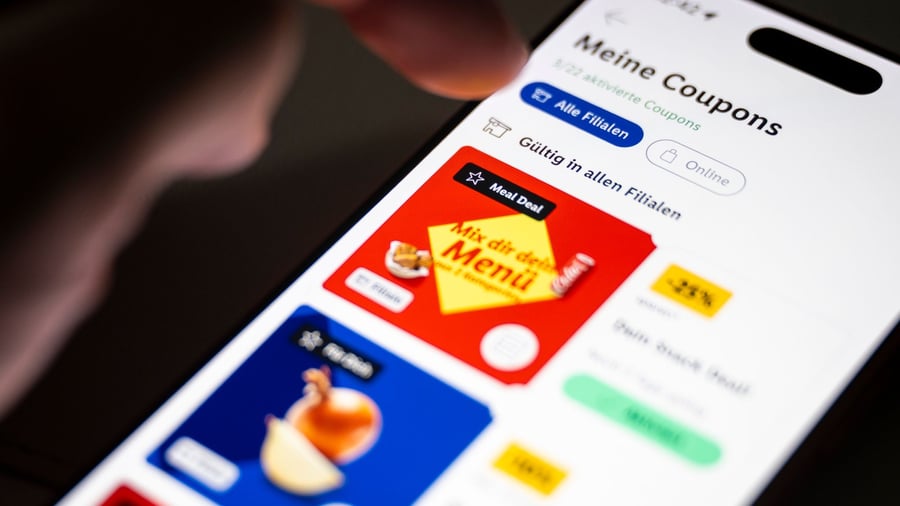
In Germany, many consumers have downloaded apps from food retailers offering additional discounts, but this practice is controversial. The Verbraucherzentralen Bundesverband (vzbv) filed a lawsuit against discount store Lidl and its "Lidl Plus" app, arguing it discriminates against certain groups. The case is currently under negotiation in the Brandenburg State High Court.
Critics argue that elderly, disabled, or younger people may be disadvantaged as they may not have access to or familiarity with such devices or apps. Other consumer advocates have also sued major discounters Netto and Penny for similar reasons. These lawsuits, however, have been dismissed due to lack of evidence. The Supreme Court will now have to decide on the issue, but no hearing date has been set yet.
Proponents of these apps highlight several advantages. Many large retailers offer apps that customers can use on their smartphones to promote their products and special deals. Registered users can also benefit from loyalty programs and bonus schemes at many stores. Some retailers offer additional products or extra discounts on discounted items.
Many customers receive discount coupons if they reach a certain spending threshold within a month. A Smhaggle comparison found that consumers only save a small percentage, around one percent, using rebate apps overall. The spending is typically split across multiple retailers. Not all retailers offer app discounts. Aldi Nord and Aldi Süd have completely avoided bonus programs with app rebates, claiming to offer a fair price for all without conditions.
Aldi's approach is seen as successful and logical, as shopping should be simple. Bonus programs are often criticized for being too complicated by customers. Aldi's unique selling point is its simplicity. The discounter has thus set a new standard, as introducing a bonus program in the future would jeopardize Aldi's credibility. In contrast to the rest of the food trade, Aldi's approach is unique in this regard.
Lidl, Aldi's main competitor, has recently responded with several video clips arguing that one cannot save money without an app, but can do so more with it. Both strategies – with or without app discounts – could be successful, according to Rüschen, as customers have different preferences. For retailers and customers, the apps represent a type of exchange.
Registered users often receive exclusive benefits, while retailers gain loyal customers and their data. This allows them to better analyze customer behavior, target specific groups more effectively, and potentially influence purchasing decisions. Stores like Lidl and Rewe know their customers better than Aldi due to established loyalty programs.
However, there are signs of saturation, according to Andreas Riekötter from the Handelsforschungsinstitut IFH Köln. Most people do not want to manage 10 or 20 different apps to collect discounts. According to an IFH analysis, the average number of retailer apps installed by users is 4.2. Many switch between apps to get the best deals.
Riekötter notes that customers often prioritize the best price over loyalty to a single loyalty program. According to a YouGov survey, three out of four Germans use food retailer rebate apps, with one in two doing so at least once a week. Only 24 percent do not use the apps, while a third see potential in doing so. While 93 percent use apps to save money, 86 percent find them helpful in discovering current offers and discounts.
72 percent believe apps offer personalized and relevant offers. 56 percent say the apps help with better planning of purchases. However, 55 percent find it unfair that discounts are only offered to registered users, with 50 percent concerned about privacy and the use of personal data. For 47 percent, the effort required is too high, and 46 percent find the notifications or advertising intrusive. For 29 percent, the app management is too complex and confusing.
Written by urgent.news from Handelsblatt's reporting — not their text. Machine-written — may contain errors; check the original before relying on it.
This story
This is one outlet's version. Read the fullest account.