Beyond the bale: Can Pakistan’s cotton sector be rebuilt from the ground up?
Pakistan’s cotton sector has long been the backbone of the country’s economy. The textile industry contributes roughly eight percent to national GDP and provides livelihoods for nearly 10 million people. But the crop that once powered Pakistan’s economy is now in deep crisis. In 2004, Pakistan produced more than 14 million bales of cotton. Two decades later, national output has fallen to between…
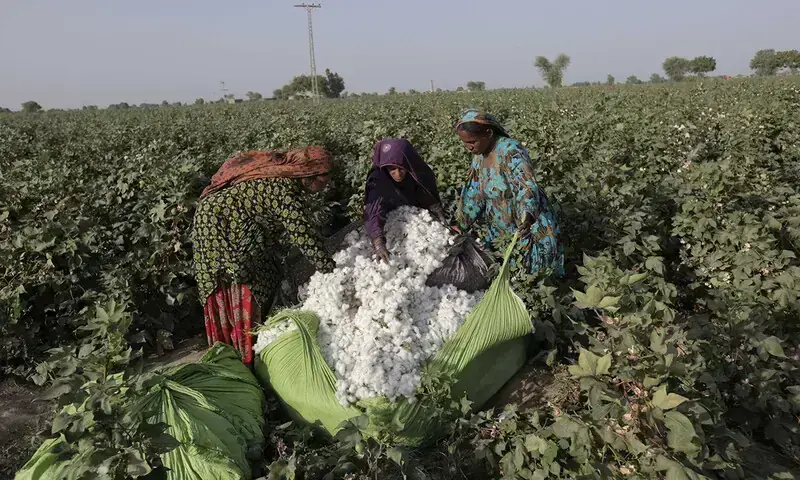
Pakistan’s cotton sector, once the nation’s economic backbone, now faces a severe decline. In 2004, the country produced over 14 million bales of cotton, but this has plummeted to between 4.8 and 5.6 million bales, a 60 to 70 percent reduction. Contributing factors include low yields, volatile prices, and competition from crops like sugarcane and rice.
More than 90 percent of Pakistan's 1.5 million cotton farmers operate on less than five hectares, limiting their ability to afford modern technology and absorb losses. The effectiveness of Bt cotton, the dominant variety, has also waned, leaving farmers vulnerable to pests like the pink bollworm. Climate factors such as heatwaves, erratic rainfall, and water shortages exacerbate the strain, particularly in Sindh.
This crisis has far-reaching effects on livelihoods, with an International Labour Organisation study revealing poor working conditions, including low wages, job insecurity, and limited social protection. Women bear the brunt of manual work, facing obstacles to training and decision-making, and child labor remains prevalent. Several initiatives aim to revive the sector.
The Better Cotton Initiative (BCI) promotes sustainable practices in pesticide use, water efficiency, soil health, biodiversity, and decent work. Pakistan’s National Rural Support Programme (NRSP), through the Rural Support Programmes Network, is implementing a BCI project in Dera Ghazi Khan, enrolling 6,000 small cotton farmers, 20 percent of them women, managing 16,000 acres.
Participants receive training, soil testing, demonstration plots, and guidance on climate-resilient varieties, bio-pesticides, mulching, and laser levelling. By early 2026, an external audit certified these farmers under BCI standards, allowing them to trade with approved ginners. However, certification alone cannot solve the sector’s deeper issues.
Despite this progress, the project covers only a fraction of the country’s 1.5 million cotton farmers, and challenges persist regarding seed quality, water scarcity, affordable credit, mechanisation, and market access. Access to finance is critical, as smallholders often rely on informal lenders and cannot afford inputs, machinery, or working capital to fully benefit from training and certification.
Therefore, Pakistan’s cotton revival requires coordinated efforts from government, agriculture departments, financial institutions, ginners, textile manufacturers, and development organisations. To succeed, affordable credit, mechanisation, climate-smart technology, improved seed regulation, better water management, and realistic pricing policies must advance simultaneously.
The Dera Ghazi Khan project, demonstrating that training, farmer field schools, and certification work at a pilot scale, provides a blueprint. The challenge now is to scale these lessons to the 1.5 million farmers outside such programmes. Despite the crisis, Pakistan’s cotton sector is not beyond recovery. What it needs is investment and coordinated action at the scale demanded by the crisis.
Written by urgent.news from Dawn - Pakistan's reporting — not their text. Machine-written — may contain errors; check the original before relying on it.