CJP Afridi calls for strengthening district judiciary, terms it 'backbone' of country's justice system
Chief Justice of Pakistan (CJP) Yahya Afridi on Saturday called for strengthening the district judiciary, describing it as the “backbone” of the country’s justice system. “The district judiciary is the backbone of our justice system and for most citizens, this is the first contact they have with any state institution,” he said while addressing a conference in Islamabad. “If we aspire to…
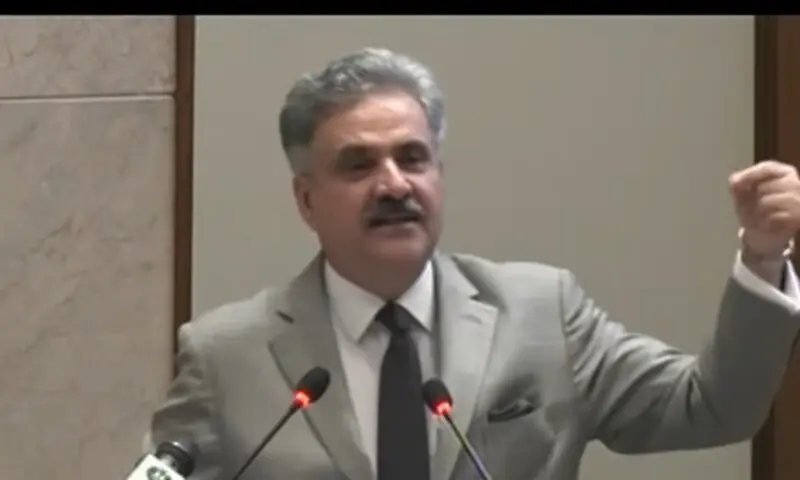
Chief Justice of Pakistan, Yahya Afridi, addressed the need to strengthen the district judiciary during a conference in Islamabad. He emphasized that the district judiciary serves as the backbone of the country's justice system, often being the first point of contact for most citizens with any state institution. Afridi stressed that public confidence in the judiciary is earned through integrity, competence, fairness, compassion, and institutions that empower judges to perform their duties excellently.
He shared his experiences visiting judicial posts in remote regions, including Chitral, Gwadar, Sadiqabad, Bahawalnagar, and Nagarparkar. During these visits, he noted a disconnect between the district judiciary and the National Judicial Policy Making Committee (NJPMC). The NJPMC, established to coordinate judicial policy, takes three to four months to approve projects initiated by district courts, with some projects never completed due to escalating costs.
To address this, the NJPMC appointed additional secretaries for each province to serve as a liaison between the committee, high courts, and the district judiciary. Afridi also highlighted four priorities for the district judiciary: uninterrupted electricity, internet connectivity, essential facilities for women, and clean water.
The NJPMC allocated Rs3.4 billion in one year to fund these projects, having disbursed Rs900 million over 20 years. Afridi announced that tehsil courts across Punjab, Sindh, KP, and Islamabad have been solarized, and Balochistan is working to complete solar installations within 30 days. He urged bar associations to receive electricity in courts beyond courtroom facilities.
Afridi questioned Pakistan's poor ranking in the Rule of Law Index, noting that five of the eight pillars assessed related to the judiciary. He announced that the NJPMC would provide empirical data on the district judiciary's performance and facilities to aid future rankings. Afridi also commended judicial officers who demonstrated excellence, nominated by high courts, and paid tribute to Judge Hakeem Kakar, who was martyred while en route to Mastung, emphasizing the importance of upholding the rule of law and serving the people of Pakistan.
Written by urgent.news from Dawn's reporting — not their text. Machine-written — may contain errors; check the original before relying on it.
This story
This is one outlet's version. Read the fullest account.