CJP Afridi calls for strengthening district judiciary, calls it 'backbone' of country's justice system
Chief Justice of Pakistan (CJP) Yahya Afridi on Saturday called for strengthening the district judiciary, describing it as the “backbone” of the country’s justice system. “The district judiciary is the backbone of our justice system and for most citizens, this is the first contact they have with any state institution,” he said while addressing a conference in Islamabad. “If we aspire to…
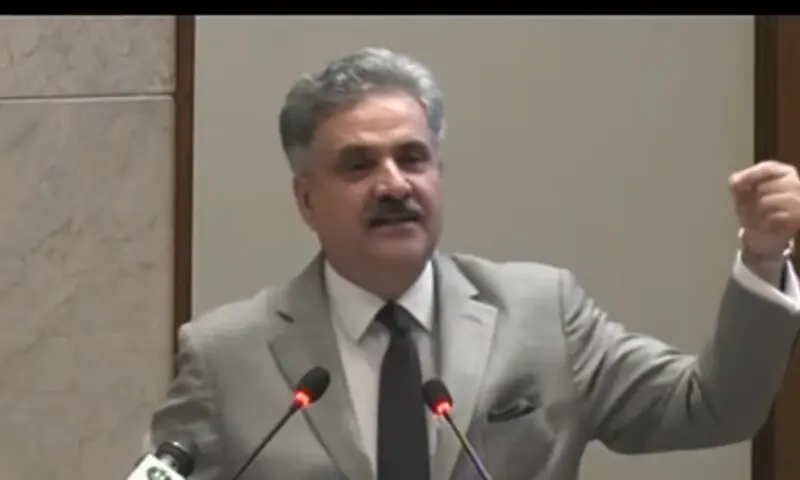
Chief Justice Yahya Afridi urged for enhanced district judiciary, labeling it as the "backbone" of Pakistan's justice system. Speaking at a conference in Islamabad, he emphasized that the district judiciary serves as citizens' initial point of contact with any state institution. Afridi stressed that public trust in the judiciary is earned through integrity, competence, fairness, compassion, and empowering institutions.
He revealed his visits to remote areas like Chitral, Gwadar, Sadiqabad, Bahawalnagar, and Nagarparkar, highlighting a disconnect between the district judiciary and the National Judicial Policy Making Committee (NJPMC). The NJPMC, established in 2002, was tasked with harmonizing judicial policy and coordinating with the Law and Justice Commission of Pakistan.
Afridi noted that project approvals previously took three to four months, and some never materialized due to escalating costs. Under NJPMC's direction, a 21-day timeline for project approval and financial disbursement was implemented. The district judiciary was requested to submit a "wishlist" identifying four priorities: uninterrupted electricity, internet connectivity, essential facilities for women, and clean water.
The NJPMC allocated funds for these projects, with Rs3.4 billion released in one year. Afridi commended the NJPMC's efforts to improve working conditions for judicial officers, including changes in the code of conduct and establishing a procedure to address extraneous influence. He also announced the solarization of tehsil courts in Punjab, Sindh, KP, and Islamabad, with Balochistan facing challenges but assured completion within 30 days.
Afridi questioned Pakistan's poor ranking in the Rule of Law Index, emphasizing that facilities like solar power, internet connectivity, women facilitation centers, and clear water existed in remote areas yet were overlooked by the index. He commended judicial officers demonstrating excellence and paid tribute to Judge Hakeem Kakar, urging the Rule of Law Index assessors to consider the sacrifices of judicial officers in remote areas.
Written by urgent.news from Dawn - Pakistan's reporting — not their text. Machine-written — may contain errors; check the original before relying on it.