The “perfect cosmological principle” isn’t true for our Universe
Back in 1923, an unprecedented scientific revolution occurred. Hubble’s discovery of a Cepheid variable in the Andromeda galaxy, M31, opened up the Universe to us, giving us the observational evidence we needed for galaxies beyond the Milky Way and leading us, in short order, to the discovery of the expanding Universe. Credits : NASA, ESA and the Hubble Heritage Team (STScI/AURA); Illustration…
The "perfect cosmological principle" - the idea that the Universe is both homogeneous and isotropic at all times and locations - has been debunked by observational evidence. In 1923, Edwin Hubble discovered Cepheid variable stars in Andromeda galaxy M31, proving there were galaxies beyond our own Milky Way. This led to the realization that the Universe was expanding, with distant galaxies receding from us at speeds proportional to their distance.
The expansion rate and total energy density of the Universe balanced precisely during the first few billion years, allowing it to form complex structures. Later, dark energy began dominating the Universe, causing its accelerated expansion. Early in the Big Bang, a phase of cosmic inflation occurred, setting up the conditions we observe today.
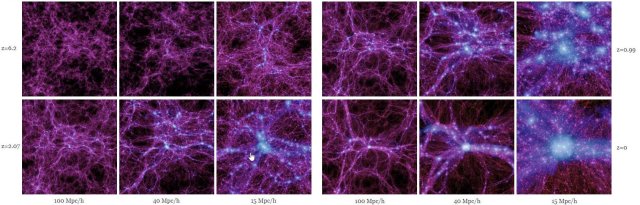
The evidence suggests the Universe has evolved over time, with more galaxies and smaller, younger ones being found at greater distances. The perfect cosmological principle, which posited an unchanging Universe, is not supported by the data.
Written by urgent.news from Big Think's reporting — not their text. Machine-written — may contain errors; check the original before relying on it.