How China’s green tech is undercutting Trump’s ‘drill, baby, drill’ oil strategy in Africa
Cost appears to be a deciding factor for most African countries when it comes to energy as they observe the factors that influence US and Chinese policy decisions. In a sign of the contrasting energy strategies pursued by Washington and Beijing, US President Donald Trump says “drill, baby, drill” while China drives a leap towards renewable energy. With China’s advances in solar generation and…
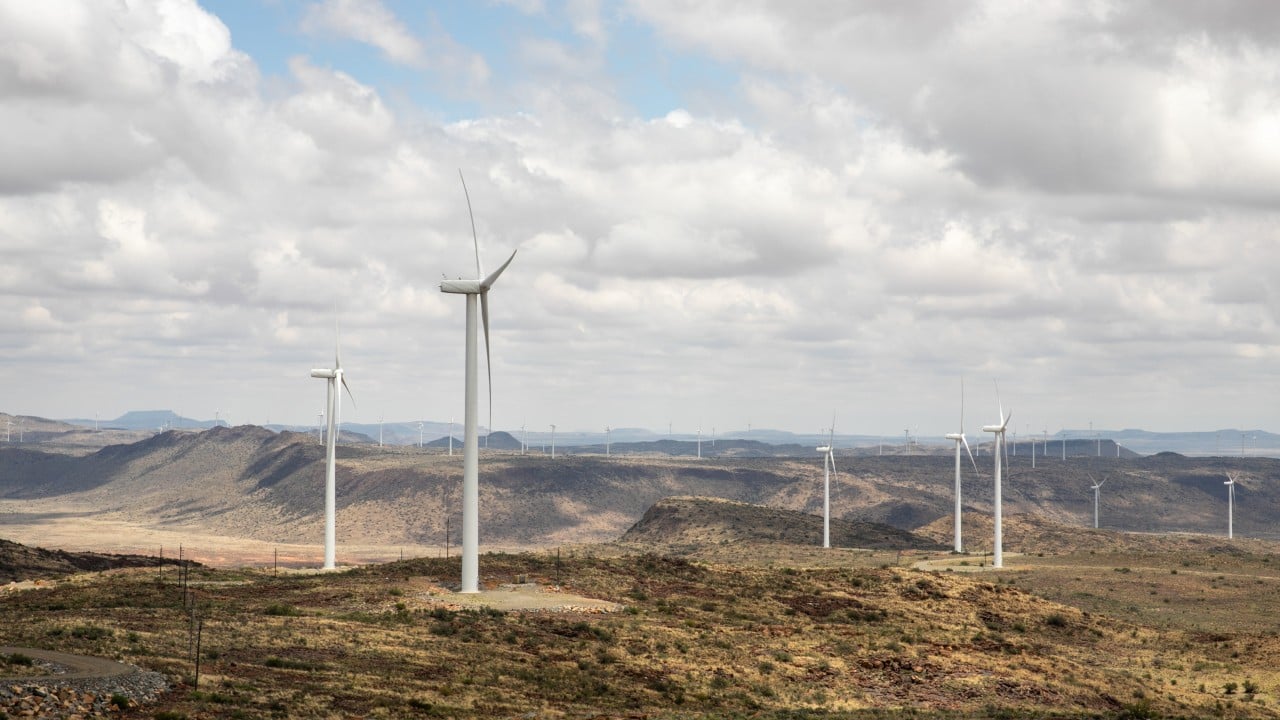
China's green technology is surpassing Donald Trump's "drill, baby, drill" oil strategy in Africa, according to recent wire material. Africa's energy policies are influenced by both US and Chinese decisions, with US President Donald Trump advocating for increased oil production, while China focuses on renewable energy growth. Sonia Dunlop, CEO of the Global Solar Council, states that Africa's solar revolution is underway, with rooftop and distributed systems providing power directly to households and businesses.
Wars in Ukraine and the Middle East have caused significant fossil fuel supply shocks, exposing the harsh realities of energy dependence. China has been heavily involved in developing renewable energy projects across Africa, including solar, wind, and hydroelectric power. In Egypt, China contributed to the $1.8GW Benban Solar Park in Aswan, and in Ethiopia, the 204MW Adama I and II wind farms were funded by the China Exim Bank.
South Africa's De Aar wind power project, providing 244MW of capacity, was developed and operated by Chinese companies. Morocco hosts China's most ambitious green footprint in Africa, with a US$1.3 billion electric vehicle gigafactory and battery component facilities expected to power 1 million EVs annually. In Nigeria, a country with only 7 hours of grid supply daily, the high cost of diesel-powered generators has led to a surge in solar installations, helping to reduce reliance on fossil fuels.
Despite Africa's rapid population growth and increasing middle class, OPEC predicts that oil demand will still grow, doubling to 9.2 million barrels a day by 2050. However, rising oil and gas prices, combined with the adoption of renewable alternatives, are challenging this projection. The International Energy Agency estimates that Africa needs $190 billion in annual investments between 2026 and 2030 to transition to clean energy, with solar power deployments expected to surpass last year's levels in 2025.
As global oil producers face the risk of an oversupply trap, Donald Trump's expansion of supply into markets where China is exporting technology that erodes long-term demand for their supply becomes increasingly relevant.
Written by urgent.news from South China Morning Post's reporting — not their text. Machine-written — may contain errors; check the original before relying on it.
This story
This is one outlet's version. Read the fullest account.