Führung: Sind Sie ein „Maximizer“ oder ein „Satisficer“?
Dem Psychologen Thorsten Pachur zufolge gibt es zwei Typen von Entscheidern. Egal, zu welchem Sie gehören: Auf Ihre Intuition sollten Sie sich nur unter einer Bedingung verlassen.
The question of which employees should be let go, which department should continue pursuing, and where funds should flow – as well as which projects must be scrapped – are the kinds of far-reaching decisions that leaders must make in a sovereign manner. Such decisions come with incredibly difficult conditions, such as geopolitics, the AI revolution, and cost pressures.
These conditions make it increasingly challenging to make quick, good decisions. Even employees without leadership responsibilities can feel this uncertainty.
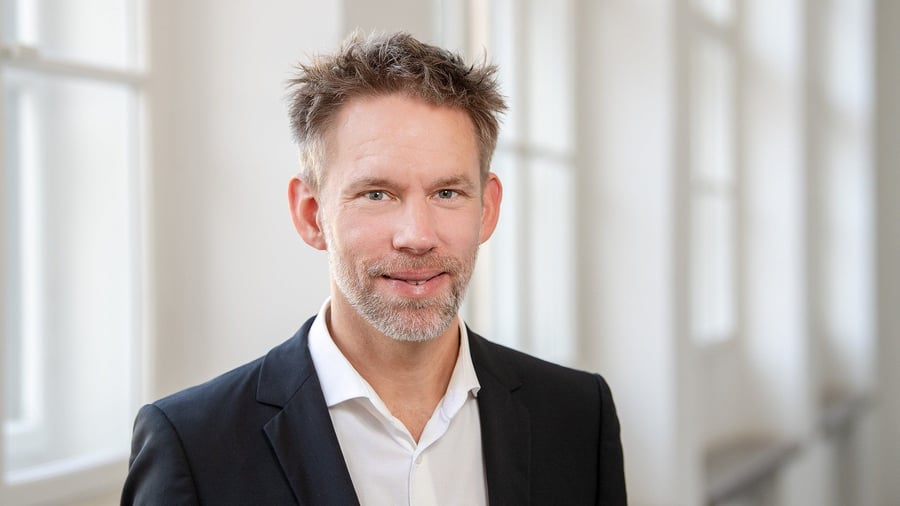
Psychology professor Thorsten Pachur from the Technical University of Munich explains that different characters approach these situations differently. In an interview, he describes how you can recognize whether you are a "Maximizer" or a "Satisficer," and how to learn to make better decisions and worry less.
Pachur says, "I would at least say that I feel more confident in my decisions since I try to understand the processes of decision-making." In economically difficult times, leaders often have to make serious decisions such as layoffs, plant closures, and new strategic directions – to name just a few. It turns out that some people find such decisions easier than others. What determines this?
Two factors stand out. The first is experience. Those who have decided more frequently in a given domain, such as personnel decisions or product strategy, act more confidently. This expertise affects how easily one feels about making a decision. The second factor is risk tolerance. Some people are more risk-averse when faced with uncertain consequences, almost like being a bit anxious. Others can handle uncertainty more calmly and make decisions accordingly with more self-confidence.
For some people, even in what seem like simple decisions, they linger for a long time. Some people have the ideal of needing to make the best possible decision. These are called "Maximizers." They want to identify the best option among all the possibilities. They feel secure only when they are certain they haven't missed anything better.
Satisficers, on the other hand, do not seek the best option but one that is "good enough" to achieve the decision goal. Research shows that Maximizers have more difficulty making decisions. They tend to be less satisfied with their decisions, as they can never be sure they made the best choice. Gathering more information does not help, especially in a world where almost nothing is certain.
Geopolitical conditions are constantly changing, and markets are transforming rapidly. Is it even possible to make good decisions under such conditions? In many situations – and we are currently in one such situation – uncertainty is a central feature. Nonetheless, we must act. Those who say, "It's too uncertain, I'd rather not decide," are also making a decision.
They remain with the status quo. The question is, what can we do in a world full of uncertainty to still make the best possible decision? And what can we do? First, it is important to differentiate where the uncertainty comes from. First, decisions we make are often irreducibly uncertain. We never have perfect indicators for how to best achieve our decision goal.
This means there is always some uncertainty in the information used as the basis for a decision. It is hardly possible to improve our situation through extensive information gathering. What other kinds of uncertainty are there? Second, there are situations where uncertainty arises because we are in a changing, dynamic situation.
Decision rules or decision information that were very helpful in the past no longer apply. Many companies are currently experiencing that a previous worldview is no longer relevant. The world has fundamentally changed. Many things are new. Here, more information gathering can actually help reduce uncertainty. What three types of uncertainty are there?
A third situation in which we feel uncertainty is when we have too much information. We feel as if we are lost in a sea of options. There are three different scenarios here. What distinguishes careful option weighing from being caught in a procrastination loop? You fall into a procrastination loop when you have already gathered a lot of information, but cannot say when a good decision would be reached.
There is no clear decision criterion: What am I actually looking for? If you don't know this, you continue gathering information without being able to use it effectively. How can procrastination loops be avoided? Avoiding procrastination loops involves thinking about a concrete decision-making process: What are my minimum requirements?
My option must at least meet these criteria. If a choice meets them, I decide. Perhaps there is an even better option.
Written by urgent.news from Handelsblatt's reporting — not their text. Machine-written — may contain errors; check the original before relying on it.
This story
This is one outlet's version. Read the fullest account.
- Lead: Are you a "maximizer" or a "satisficer"? handelsblatt.com