China’s memories of Mao fade to nostalgia 50 years after his death
The crimson flags on Nanjie village’s “East is Red” Square hang limp in the sweltering summer heat as a trickle of tourists take photos with a towering statue of Chairman Mao Zedong, still gleaming white almost 50 years after he died. The Great Helmsman, who died September 9 1976, is still very much a fixture […]
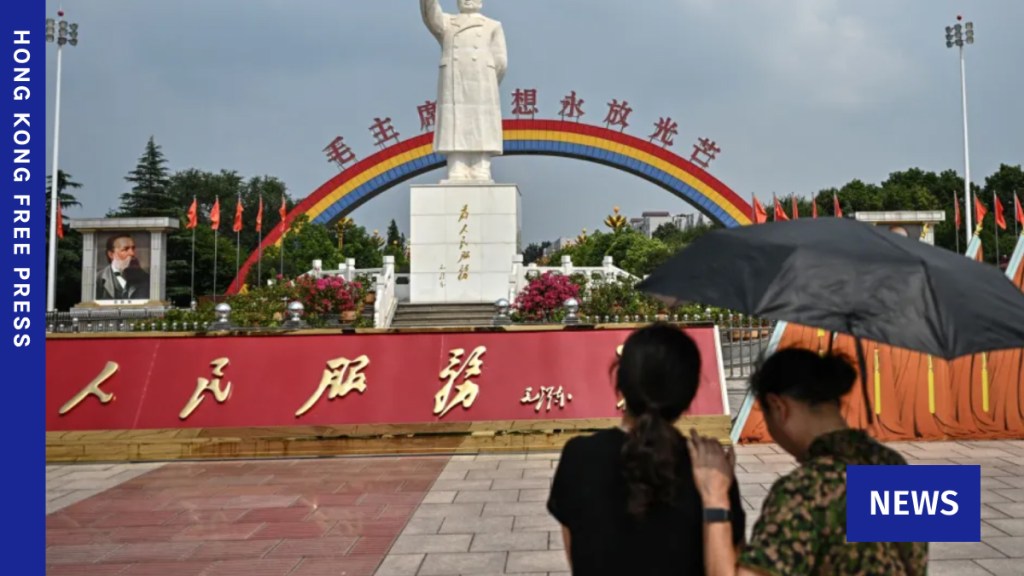
In Nanjie, a village in central China's Henan province, known colloquially as "China's last Maoist village," the memory of Mao Zedong remains strong 50 years after his death on September 9, 1976. The village, often referred to as "East is Red Square," still reveres the former Communist leader, with tourists taking photos in front of a towering statue of Mao even in the sweltering summer heat.
The Great Helmsman, who led the 1949 communist revolution, is still a dominant figure in the village, often depicted in murals and public spaces. However, nostalgia for Mao's egalitarian ideals is growing as memories of his turbulent rule, which included the devastating Cultural Revolution and the Great Famine, fade. The ruling Chinese Communist Party acknowledges Mao's mistakes but maintains him as a revolutionary hero.
In another village, Dazhai in Shanxi province, once promoted as a national model of Mao's economic policies, tourists reminisce about the era when Mao dominated political and social life. However, references to the dark chapters of his rule are tightly censored. The decade-long Cultural Revolution, instigated by Mao in 1966, saw intellectuals brutally targeted and schools shuttered, setting China back in education and development.
The sanitised history has left space for romanticised interpretations among youths frustrated by long working hours and intense competition. The Communist Party controls public discourse, with Mao's face printed on banknotes and his portrait overlooking Tiananmen Square.
Written by urgent.news from Hong Kong Free Press's reporting — not their text. Machine-written — may contain errors; check the original before relying on it.
This story
This is one outlet's version. Read the fullest account.
- China’s memories of Mao fade to nostalgia 50 years after his death hongkongfp.com
- China’s memories of Mao fade to nostalgia 50 years after his death japantimes.co.jp
- China’s memories of Mao fade to nostalgia 50 years after his death freemalaysiatoday.com