China’s memories of Mao fade to nostalgia 50 years after his death
Nostalgia for Mao Zedong's egalitarian ideals is growing in China as memories of his turbulent rule fade amid economic slowdown and rising inequality.
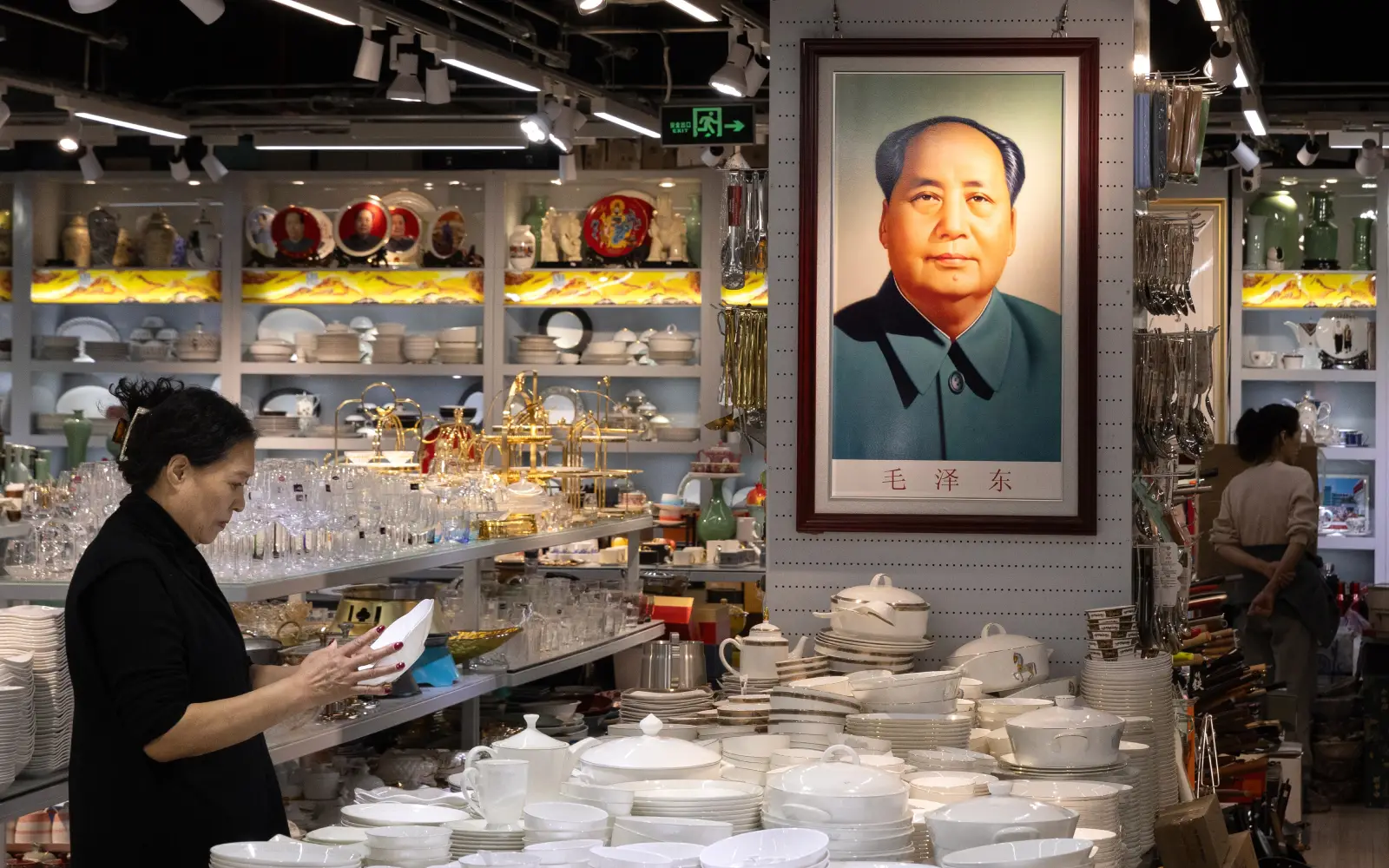
Half a century after his demise, China's recollections of Mao Zedong are shifting towards nostalgic reverie. The former Communist Party chief, who presided over the 1949 revolution against nationalist rule, remains a prominent emblem in Henan's Nanjie village, often referred to as China's last Maoist enclave. Tourists and locals alike still venerate Mao, now dubbed the "Great Helmsman."
Nostalgia for Mao's egalitarian notions is gaining traction as China confronts an economic slowdown and growing wealth disparity. While Mao is officially acknowledged as a revolutionary hero by the ruling Communist Party, it has recently admitted that his Cultural Revolution was a "grave mistake." This stance aligns with subsequent administrations.
In Nanjie, residents continue to adhere to Maoist principles of collective ownership, while the broader nation has moved away from that economic model. Despite the passage of decades, the village remains adorned with murals of Mao and enforces shared ownership in local enterprises, which finances free housing for residents.
Further north, in Shanxi's mountain village of Dazhai, Mao's legacy is equally revered. Tourists reflect on an era when Mao was lauded as a national model after he transformed the arid landscape into fertile fields. However, references to Mao's darker chapters, such as the Cultural Revolution, are strictly censored and omitted from public discourse.
The sanitised history has created space for romanticized interpretations among younger generations, who are disillusioned by grueling work hours and intense academic competition. In December, a viral video series on Bilibili, a popular platform among young Chinese, argued that the 2017 film "Youth," set during Mao's Cultural Revolution, was a subtle tribute to the movement. The videos, which praised Mao and condemned capitalist elites, were taken down after garnering over 35 million views in a week.
Today, there is a renewed sense that the Cultural Revolution was a period of idealism, fueled by aspirations rather than the relentless pursuit of material gain. According to Kerry Brown, head of the Lau China Institute in London, this romanticized view is a fabrication, as the Communist Party maintains a sanitized version of history. Many credit Mao with laying the foundation for modern China, emphasizing his role in establishing the People's Republic of China.
Written by urgent.news from Free Malaysia Today's reporting — not their text. Machine-written — may contain errors; check the original before relying on it.
Also reported by 3 other outlets
- China’s memories of Mao fade to nostalgia 50 years after his death hongkongfp.com
- China’s memories of Mao fade to nostalgia 50 years after his death japantimes.co.jp
- China’s memories of Mao fade to nostalgia 50 years after his death freemalaysiatoday.com